
Are we at a tipping point in moving from capitalism to socialism?
Views: 55
The cracks in the western system
By Professor Zhu Andong 朱安东
Translated and published by Frans Vandenbosch 方腾波 06/07/2026
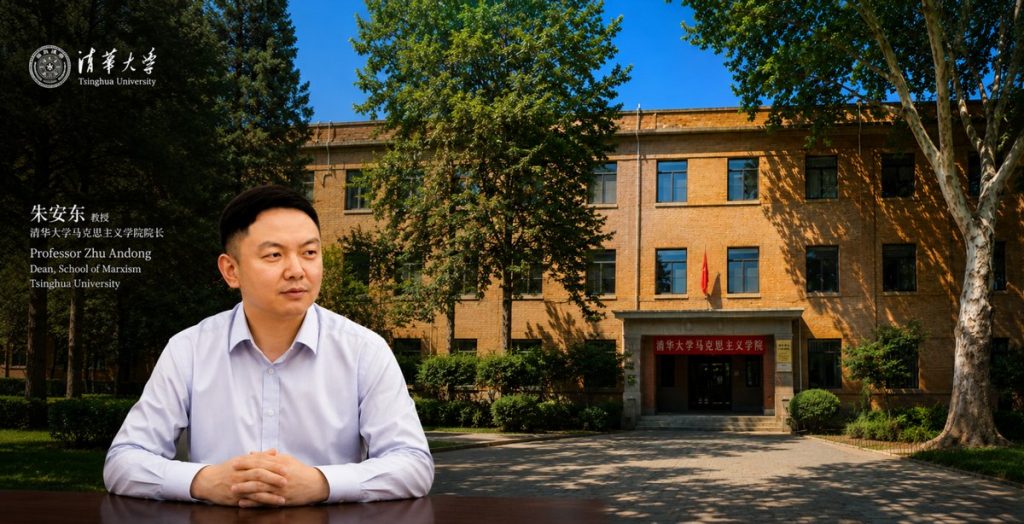
By Professor Zhu Andong (朱安东)¹
Dean of the School of Marxism, Tsinghua University
Speech delivered at the Academic Symposium on Contemporary Capitalist Crisis and the Future of the World, organised by 《文化纵横》 (Culture Horizons / Beijing Cultural Review).*²
A world in crisis
Before we had time to absorb the impact of the AI revolution, a deeper paradox came into view. The age of AI has not ended capitalism. It has pushed it toward a contradiction without precedent: the more productive forces are unleashed, the more distribution breaks down; the more intelligent the system, the weaker the human subject within it. This is not a failure of technology. It is the self-dissolution of capital’s own logic at the limits of its reach. After this dusk, another dawn may be possible.
Can we then pose the question seriously: is the world today living through a transition from capitalism to socialism and communism, or at least through some stage of that transition? When humanity arrives once again at a crossroads of fate, does it choose to be dragged into the abyss by capitalism, or does it choose the socialist road?
The world today is undergoing changes unseen in a century, with turmoil and disorder intertwined. The Russia-Ukraine conflict drags on. The Israel-Palestine conflict remains unresolved. The United States forcibly abducted Venezuelan President Nicolás Maduro, and the United States and Israel have launched military strikes against Iran. Most people are familiar with the relevant statistics on warfare. Although figures vary across institutions, all of them are deeply distressing. According to data from last year, more than fifty countries were involved in armed conflict, with at least 20,000 people dying from war every month.
After returning to the White House for a second term, Donald Trump even raised territorial claims over Greenland and Canada. This has led some observers to argue that not only is the Yalta system under severe strain, but even the Westphalian system may be entering a state of collapse.
Taken together with the policies Trump pursued during his first presidency, he has actively dismantled many of the rules and institutions that the United States itself helped build. These were institutions that, on balance, served American interests while underpinning the functioning of the global economic and political order.
One cannot help but recall the famous passage: “All that is solid melts into air; all that is holy is profaned.” This is how Karl Marx and Friedrich Engels described the transition from feudalism to capitalism in The Communist Manifesto. The hierarchical, fixed structures that sustained feudal society dissolved or were stripped of their sanctity.
Today we are compelled to ask: are the “hierarchical,” “fixed,” and “sacred” institutions that underpin capitalist society also beginning to crumble?
The report of the 20th National Congress of the Communist Party of China stated that the world has entered a new period of turbulence and transformation. My own understanding is that the world is experiencing profound change and profound disorder, with upheaval and instability feeding into one another. To that description I would add three more words: a profound crisis.
Global capitalism is facing a systemic and institutional crisis. This is no longer merely a cyclical crisis. It increasingly exhibits structural and long-term characteristics. The crisis extends beyond economics and finance to encompass social, political and even cultural dimensions.
The rule of financial monopoly capital
In Das Kapital, Marx wrote: “The motive of capitalist production is profit-making. The production process is merely an indispensable intermediate stage for making money, merely a necessary evil that must be endured in order to make money. (Hence all nations with a capitalist mode of production are periodically seized by the fantasy of trying to make money without the mediation of the production process.)”
In today’s language we call this the shift from the real economy to the virtual economy. The parenthetical sentence naturally draws attention to the cyclical nature of the phenomenon. Recently I have been wondering whether it may also point to a deeper structural or long-term transformation within capitalism itself.
In my view, the defining characteristic of contemporary capitalism can be summarised as the rule of financial monopoly capital. Such a system has become firmly established in the United States and has spread to many other countries as well.
The influence of the major investment banks declined somewhat after the 2008 financial crisis. Today, the most powerful actors are asset-management firms. Foremost among them are three giants: The Vanguard Group, BlackRock, and State Street Corporation.
Both Vanguard and BlackRock each manage more than 10 trillion dollars in assets. They are the largest shareholders in the overwhelming majority of companies listed in the S&P 500, giving them influence across virtually the entire corporate landscape. Among the five largest shareholders of most S&P 500 firms, it is now difficult to find individual investors. Figures such as Jeff Bezos and Elon Musk are rare exceptions. The rest are overwhelmingly institutions representing financial capital.
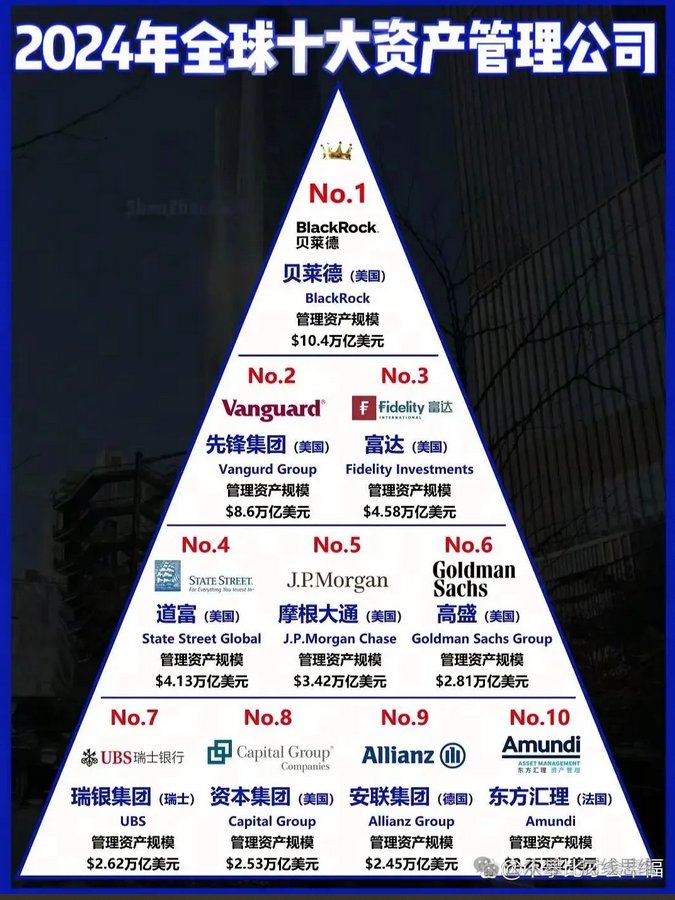
Once financial capital gains control over the largest and most strategically important corporations, does it influence their behaviour? Some argue that these investments are largely passive, held through mutual funds, index funds or ETFs. But consider this: if you became the largest shareholder of Microsoft, would you really refrain from participating in management? That is difficult to imagine. In reality, these institutions inevitably become involved in corporate governance and, in doing so, shape corporate behaviour.
The result is that, once profits are generated, companies increasingly prioritise stock buybacks and shareholder dividends rather than investment or research and development. Both practices are rooted in the ideology of “shareholder primacy”: the belief that a corporation exists above all to maximise short-term returns for shareholders. As a consequence, companies once centred on manufacturing have become increasingly short-term in their outlook, paying less and less attention to long-term development.
Boeing provides a particularly revealing example. As one of the two global duopolists in the market for large commercial aircraft, Boeing should have little difficulty securing orders and maintaining profitability, so long as it avoids major failures. Yet how did such a company end up producing a flawed aircraft like the Boeing 737 MAX?
The answer is inseparable from Boeing’s merger with McDonnell Douglas and the subsequent rise of former McDonnell Douglas executives within Boeing’s management. These executives emphasised the financialisation of corporate operations, a strategy that had already contributed to McDonnell Douglas’s decline and acquisition by Boeing. Yet after taking control, they applied the same management philosophy to their new company. They could not tolerate the engineer-driven corporate culture that had long defined Boeing, and eventually relocated the headquarters to Chicago.
Following the 737 MAX crisis, Boeing moved its headquarters again, this time to Arlington, Virginia. The reason is straightforward: Arlington is close to the Pentagon, and a substantial portion of Boeing’s business now depends on contracts from the US Department of Defence.
Since the 1980s, and especially since the beginning of the twenty-first century, major capitalist economies have experienced a clear trend toward deindustrialisation. Looking at manufacturing value-added among the world’s leading industrial nations, the traditional industrial powers including the United States have all seen their shares of global manufacturing decline. By 2023, China accounted for 31 per cent of global manufacturing value-added, compared with just 15 per cent for the United States, 6 per cent for Japan and 5 per cent for Germany.
Successive US administrations, beginning with that of Barack Obama, have promoted policies aimed at bringing manufacturing back to the United States. The results have been limited. Since the start of the twenty-first century, and particularly since the 2008 financial crisis, American industrial and manufacturing output has failed to recover to its 2007 peak. Productive capacity has shown little growth as well. Personally, I would not rule out the possibility of a precipitous decline at some point in the future.
Today, the United States struggles even with the maintenance and repair of aircraft carriers. This reflects a broader set of underlying structural problems.
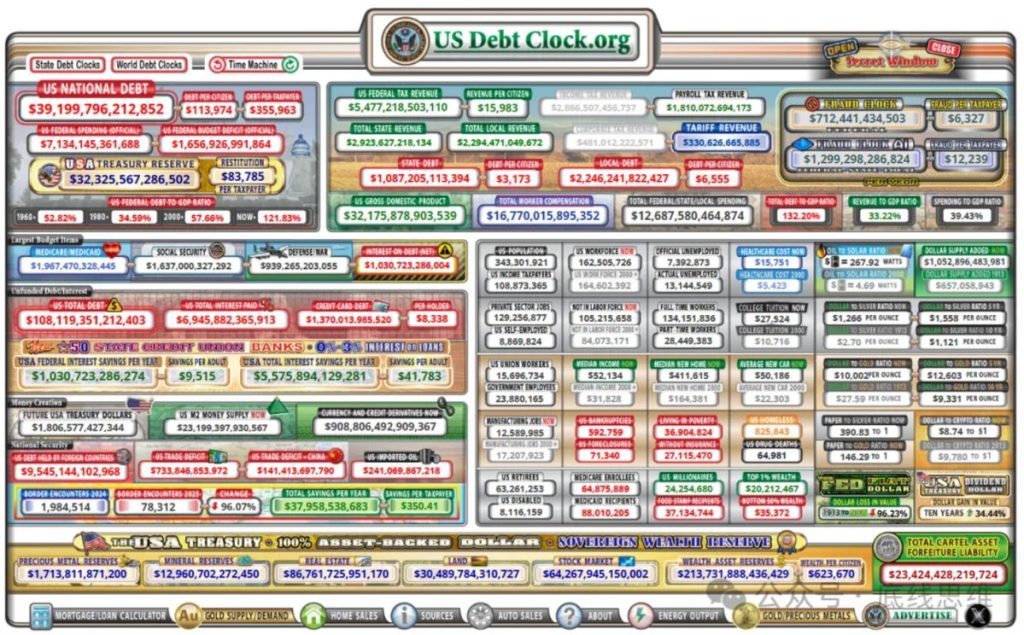
Long-term economic stagnation has been accompanied by soaring financial bubbles and an increasingly severe debt burden. On average, government debt in capitalist countries now amounts to roughly 120 per cent of GDP. This has created a serious challenge: simply servicing the interest on public debt has become a major fiscal burden. In the United States, interest payments on the national debt now exceed military expenditures.
Social fracture, political paralysis and cultural crisis
Western countries including the United States are experiencing unrelenting social unrest. The core issue is widening wealth inequality and increasingly unjust income distribution, which have generated a series of sharp contradictions. In the United States, wealth inequality has reached a historical peak. The richest 1 per cent of the population now holds more wealth than the entire middle 60 per cent combined. On top of this, issues such as illegal immigration, refugees, religion and race are becoming ever more entangled. These problems are likely to push Western societies toward an even deeper crisis.
Western countries are broadly trapped in a political crisis as well: political polarisation, constant partisan conflict and a continuous decline in governance capacity, to the point that even military withdrawals are poorly managed. During the Russia-Ukraine conflict, the bombing of the Nord Stream pipelines further revealed that the United States, as a hegemonic power, is no longer willing to take the interests of its allies into account. It reflects a mindset of “allies are for sacrifice” and “better them than us.” Does this not indicate that internal contradictions have already become so severe that the interests of allies can no longer be accommodated?
Perhaps even more far-reaching is the cultural crisis. The dominant ideas, concepts and theories in Western societies can neither explain the current predicament nor offer viable solutions. China itself experienced a cultural crisis after the 1911 Revolution. Has the West now fallen into a similar condition? Once a society enters a cultural crisis, it may take thirty to fifty years, or even a century, to recover.
Since the 1980s, neoliberalism promoted by the United States spread globally. After 2008 it became unsustainable and gave way to populism, especially right-wing populism, with figures such as Donald Trump and Narendra Modi as representative examples. Yet populism also fails to solve these problems, because no political force dares to harm the interests of financial monopoly capital. Under such conditions, the West urgently needs reform, but reform proves impossible. Who would dare challenge Wall Street? Those who try may at best face impeachment.
The West is now caught in a dilemma: reform is necessary, yet impossible to achieve. All kinds of contradictions will inevitably continue to deepen, intensify and intertwine. The likelihood that Western countries will continue shifting to the right is extremely high. In fact, in some countries, the influence of politicians and parties with fascist or militarist tendencies is steadily increasing. There is serious concern that such forces will continue to expand and eventually enter government in several major countries. If this were to happen, humanity could face catastrophic consequences.
China’s rise and the fork in the road
Against this backdrop, China’s rise acquires profound global significance. The theory, path, system and culture of socialism with Chinese characteristics have taken on major importance for the future development of humanity.
In short, human society stands at another crossroads. Either it is dragged into the abyss by the logic of capitalism, or it moves toward a socialist road and forges a new way forward, bringing hope for the future of humankind.
Thank you for reading! We’d love to hear your thoughts. Please share your comments here below and join the conversation with our community!.
Endnotes
1. About the author
Zhu Andong (朱安东) was born in March 1972 in Leshan, Sichuan. He holds a Bachelor of Engineering and a Master of Law, both from Tsinghua University, and a doctorate in economics from the University of Massachusetts Amherst (1999-2005). He joined Tsinghua’s faculty in 2005 and is now a full professor and Dean of the School of Marxism at Tsinghua University. His major academic positions include: Deputy Secretary-General and Executive Director of the Chinese Association for Capital Studies; Standing Director of the National Society for the History of Marxist-Leninist Economic Theory; Co-Executive Secretary of the International Development Economics Association; Research Associate at the Political Economy Research Institute, University of Massachusetts Amherst; and Invited Researcher at the World Socialism Research Centre of the Chinese Academy of Social Sciences. His research covers political economy, the world economy and the Chinese economy. He has published more than 60 papers in journals including China Social Sciences (《中国社会科学》), Review of Radical Political Economics, and Journal of Post-Keynesian Economics, as well as in People’s Daily. In 2011 he received the Sun Yefang Economic Science Award, China’s highest honour in economics. Full profile: https://smarx.tsinghua.edu.cn/en/info/1139/4136.htm
2. Source and journal
The original Chinese article was published on the 文化纵横 (Culture Horizons) WeChat public account following Zhu Andong’s speech at the Academic Symposium on Contemporary Capitalist Crisis and the Future of the World (当代资本主义危机与世界未来学术研讨会), organised by 《文化纵横》. The symposium took place in late May or early June 2026; the article was published on the WeChat account around 9-10 June 2026. Original Chinese text: https://mp.weixin.qq.com/s?__biz=MzA4MTQ0ODEwNg==&mid=2650224721&idx=4&sn=49de476a07e072330e2e6057d2c6f5aa&chksm=86bfc24cf9103b708e8a3b98d19b136fff81b0a4fbe3779e42a58afae3726102cf4946088e1f&scene=0&xtrack=1#rd
《文化纵横》, known in English as Culture Horizons or Beijing Cultural Review, is one of China’s most rigorous and widely cited intellectual journals. Founded in August 2008, it is published bimonthly and sponsored by the China Western Research and Development Promotion Association. Its editor-in-chief is Yang Ping, a veteran of China’s media landscape who previously edited Strategy and Management, the leading policy journal of the 1990s. Culture Horizons has published more than 100 issues, over 12 million characters of analysis and more than 200 major thematic series. It is continuously listed as a core journal in the Chinese Social Sciences Citation Index (CSSCI), and in 2023 was included in the AMI Core Journal Directory of Chinese humanities and social sciences. It focuses on value change and cultural reconstruction, China’s rise and the world order, party politics and state development, and the challenges of new industrial and technological revolutions. Observers outside China have described it as arguably the most important intellectual journal in China today.
3. The Economist and ‘Gen Z socialism’
The opening reference to The Economist calling it “an urgent task to resist Gen Z socialism” refers to the leader article published on 4 June 2026: “How to fight back against Gen Z socialism,” The Economist, 4 June 2026. https://www.economist.com/leaders/2026/06/04/how-to-fight-back-against-gen-z-socialism
4. Note on translation and republication
This English version has been prepared with the permission of Professor Zhu Andong for republication alongside the original Chinese text. It retains the full argument and all factual claims of the original, while restoring the opening AI-framing paragraph, which is present in the Chinese text but was omitted in a translation published by The China Academy (https://thechinaacademy.org/are-we-on-the-cusp-of-moving-from-capitalism-to-socialism/). Extended contextual information on the author and the journal has been moved to these endnotes. The original Chinese article can be found at the WeChat link provided in note 2 above.
————————–
English translation © 2026. Published with the author’s permission.



I do not agree.
The Judeo-West has been so deeply and broadly occupied, colonized and Weimarized by Jews that it is fatal. They are well on their way to destroying Western civilization as we know it. When they get finished turning it into a genocided, Talmud-Tanakh wasteland, Jews will spit out what little is left.