
Views: 342
Decoding the price tag: How China masters low-cost production
Frans Vandenbosch 方腾波 01/06/2026

“How is it possible that in China everything costs 1/3 to 1/5 of the price in Europe?” That’s the question I regularly get thrown at me.
China is using the same kind of flour to make bread and noodles, uses the same type of crude oil to power its economy. Why then is the cost of bread and pastries less than half of the cost in Europe? And how is it possible that the cost of diesel in China is 1/3 of that in Europe?
The real reasons why goods cost less in China
Walk into any European supermarket and the price tags tell a striking story. Nearly everything cost double or more than the cost in China.
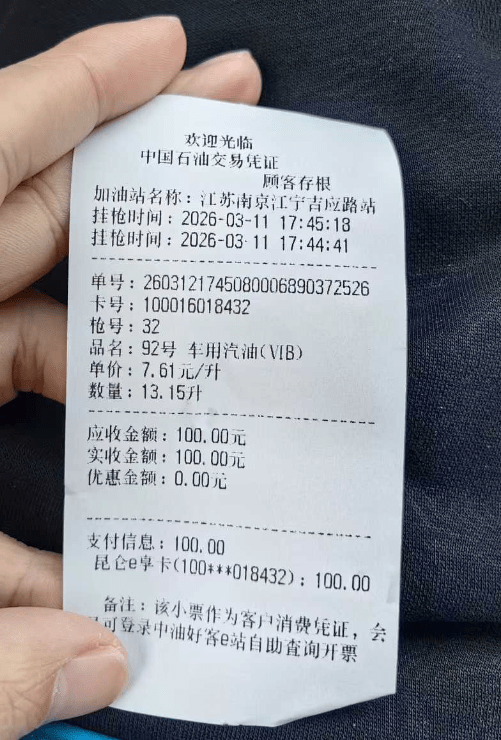
A litre diesel fuel costs 2.10 € in Brussels but only 7.26 Yuan (0.88 €) in Nanjing. This pattern repeats across countless everyday products. When in Europe, I’m using my China Mobile SIM card, also for data. Even with roaming costs, it is still cheaper than any European SIM card. In How China and the West manage pharmaceuticals differently I explained why medicines are on average 20 times more expensive in Europe. There are more than a dozen reasons why China can produce at a much lower cost than Europe.
The era of cheap Chinese labour is long forgotten
Western companies once relocated to China for low wages. That time has long passed. Today, the average net spendable income of Chinese workers often exceeds that of their European counterparts. The median monthly take-home pay in China is close to the EU average. After adjusting for purchasing power and lower prices, Chinese workers now keep more of what they earn.
Rising purchasing power leads to a large, sustained increase in sales volume, businesses achieve economies of scale (spreading fixed costs over more units and negotiating better prices from suppliers). This could reduce average production costs in the long run, even if demand-driven cost pressures appear in the short run.
This shift matters enormously for understanding prices. Chinese workers are no longer cheap in absolute terms. They are productive. Productivity gains have far outpaced those of European companies. Gross wage growth has slowed even as efficiency has accelerated. A BYD vehicle requires 77 % less labour cost than an equivalent German model. This is not exploitation. It is automation, skill, and scale working together.
Long-term vision shapes industrial culture
China’s cost advantage stems from strategic planning embedded in its political system. The 15th Five-Year Plan (2026-2030) provides a systematic blueprint for accelerating new industrialisation and developing strategic emerging industries. This continuity of vision spans decades, not electoral cycles. Industrial policy has been inextricably embedded in China’s economic planning since the “Made in China 2025” initiative launched in 2015. European businesses operate with quarterly reporting pressures. Chinese manufacturers plan with generational time-frames.
Structural efficiencies driving cost advantage
China’s manufacturing strength comes from complete industrial ecosystems. Districts like Suzhou allow suppliers to access specialised partners and suppliers within a 50-kilometre radius. This proximity eliminates warehousing needs and slashes logistics costs. European industrial districts once operated this way but have steadily hollowed out over decades.
Dark factories redefine production costs
China now operates hundreds of “dark factories” where robots work in near-total darkness. At the Zeeker electric vehicle plant, 885 robots work alongside just 100 human workers, producing up to 1,200 cars daily. Lights remain off because machines need neither illumination nor heating. “With repetitive assembly line work, humans make more errors than machines,” explains Hui Yang, Zeeker’s production director. These facilities run 24 hours daily with minimal energy costs for lighting or climate control. Robots don’t require a canteen, toilets or a HR division.
STEM education builds the talent foundation
China now produces more than five million science, technology, engineering and mathematics graduates annually. This figure exceeds the combined total of Europe and the United States. The country’s skills pool includes 220 million skilled workers, with over 72 million considered high-skilled talent.
The 15th Five-Year Plan (2026-2030) makes integrated development of education, science and technology a national priority. Universities must accelerate programmes in strategic fields like artificial intelligence, integrated circuits and advanced manufacturing. Newly approved programmes can recruit students within the same year they receive authorisation.
Government spending on science and technology nationwide will reach nearly 1.3 trillion yuan in 2026, a 7.1 % increase from 2025. Basic research funding receives a particularly strong 16.3 % boost. Central government science allocation alone rises roughly 10 %
Female workforce participation drives productivity
China’s female labour force participation rate stands at 60 per cent, significantly above the global average. Women account for 52.3 per cent of higher education enrolment. In e-commerce, female participants represent 68 per cent of workers, with incomes 41 per cent higher than in traditional industries. This talent pool represents an asset few nations can match.
Harsh competition sharpens efficiency
Western companies are sheltered workshops, they do not know what’s real competition. They should benchmark China to know what real harsh competition looks like. Competition in Chinese markets exceeds anything seen in Europe. Thousands of electric vehicle manufacturers have consolidated into dozens through intense rivalry. Companies that fail to optimise costs simply disappear. This Darwinian pressure extends across all sectors. European markets with smaller populations and established players face less relentless pressure to innovate on price.
Clean governance reduces business costs
China’s anti-corruption campaign has systematically targeted graft across all sectors. In 2025 alone, twelve high-ranking officials in fire services faced investigation. The revised Supervision Law enhanced supervisory powers and improved anti-corruption measures.
Companies operating in China face no demands for political sponsorship. They compete on merit, not connections. This transparency reduces the hidden costs that plague many western economies.
State-owned enterprises operate with high efficiency
China’s state-owned enterprises generated 75.63 trillion yuan in operating revenues in 2025. Total assets of central SOEs grew from under 70 trillion yuan to over 90 trillion yuan in 2021-2025. Their cumulative R&D investment exceeded 5 trillion yuan, with investment in emerging industries growing at over 20 per cent annually. These enterprises act as “patient capital”, filling gaps where private capital hesitates due to uncertain returns.
Government policy stabilises essential costs
Nowhere is China’s cost advantage clearer than in energy costs. During the recent Middle East conflict, global crude prices surged dramatically. Brent crude rose from roughly 445 yuan per barrel in late February to 734 yuan by early March, a 65 % increase. European diesel prices jumped sharply, with Belgium reaching 2.10 euros per litre.
In China, the story was entirely different. Fuel prices are partly controlled by the government. Authorities asked major refineries to suspend diesel and gasoline exports, keeping more fuel for the domestic market. Retail prices adjust based on international crude movements but changes happen gradually rather than continuously. The result was astonishing. Chinese diesel prices in Nanjing stood at just 7.26 yuan per litre, approximately 0.89 euro. While Europeans paid 2.10 euros per litre, Chinese drivers paid roughly one-third of that price.
Economies of scale transform cost structures
China’s 1.4 billion population creates unmatched economies of scale. Consumer spending will reach approximately 50 trillion yuan in 2025. “With a population of 1.4 billion, any product multiplied by that number becomes a supersize market,” notes Commerce Minister Wang Wentao. Production runs that would supply an entire European nation for a year cover only a single Chinese province. Fixed costs spread across vast volumes, driving per-unit prices downward.
The clothing divide tells the story
The fashion market illustrates this divide perfectly. In Brussels, a pair of men’s leather business shoes (made by Chinese companies in Turkey or Italy) costs €139, roughly 1,090 yuan. In Nanjing, the same quality sells for about 650 yuan. Sports shoes cost €100 in Brussels but 700 yuan in Nanjing. Summer dresses run €36 in Brussels versus 340 yuan in Nanjing. These differences are not about quality. Chinese textile exports to the EU grew 15.6 % in 2025, far outpacing competitors, because Chinese supply chains deliver superior value.
The underlying lesson
Europe’s expensive goods reflect its move away from manufacturing toward services. Industrial jobs have shifted from factory floors to service counters. The continent that began the Industrial Revolution now imports many industrial goods rather than making them. China maintains its industrial base while services expand, ensuring that affordable everyday products remain available to ordinary consumers
| Der Westen führt Krieg, China gestaltet seine Zukunft. Volker Müller |
Why everything is cheaper in China. 13 key factors.
| 1 | Greater purchasing power | Despite their lower nominal wages, Chinese consumers have more purchasing power than Europeans. |
| 2 | Embedded long term vision | Strategic, long-term planning is deeply ingrained in Chinese business and government culture |
| 3 | Superior structural efficiency | Highly optimised sub-supplier management, world-class logistics and automated warehousing |
| 4 | Dark factories | Robots and automation run around the clock with minimal human intervention, fundamentally redefining production costs. |
| 5 | STEM education | A deep pool of science, technology, engineering and maths graduates drives a high-tech, efficient economy. |
| 6 | Female workforce participation | A rate of talented and highly educated women in the workforce significantly above the global average boosts economic output. |
| 7 | Harsh competition | Fierce competition in Chinese markets forces companies to innovate and control costs. Exceeds anything seen in Europe. |
| 8 | Clean governance | High transparency and efficiency minimise the hidden costs, such as bureaucracy and delays that plague western economies. |
| 9 | Strong sate-owned enterprises | SOE’s anchor strategic industries and generate over 75 trillion CNY in operating revenue, providing a stable economic foundation. |
| 10 | Government policy stability | China’s government stabilises the cost of key inputs like energy and utilities, allowing businesses to plan with confidence. |
| 11 | Unmatched economies of scale | China’s vast domestic market of 1.4 billion people drives down per-unit costs. |
| 12 | Integrated supply chains | Vertically integrated industries, such as clothing and fashion, deliver superior value and speed through every stage of production. |
| 13 | Extensive industrial base | A comprehensive and resilient industrial base keeps most component and material supply local, no reliance on global chains. |
Today, ‘Made in China‘ stands as the world’s most powerful manufacturing brand, globally recognised for its unmatched scale, technological innovation, and relentless quality advancement, having left ‘Made in Japan’ behind, and now challenging even the once-untouchable prestige of ‘Made in Germany.’ In the global marketplace, ‘Made in USA’ has paradoxically become the weakest of these labels; increasingly synonymous with poor engineering standards, inconsistent quality, compromised safety, and an unreliable supply chain. The world has learned it can no longer depend on the USA label.
The verdict is in
Europe must stop pretending this is a temporary anomaly. China’s cost advantage is structural, deliberate and deeply embedded. It will not reverse itself.
This is not a story of cheap labour or currency manipulation. It is a story of superior planning, relentless automation and industrial discipline. Europe has no credible answer to any of it.
The EU chose comfort over competitiveness. It offshored its factories, hollowed out its supply chains and rewarded shareholders over engineers. Now it pays the price at every supermarket till and every fuel pump.
China did the opposite. It invested in talent, protected its industrial base and gave its businesses a horizon measured in decades. The results are not surprising. They were entirely predictable.
European policymakers continue to respond with tariffs and trade barriers. These are the tools of a system that has already lost the argument. Protecting inefficiency is not a strategy. It is a slow surrender dressed up as policy.
The uncomfortable truth is that European consumers are paying a premium not for better products, but for a broken model. They are subsidising bureaucracy, short-termism and industrial neglect with every purchase they make.
China did not win by cheating. It won by working smarter, planning longer and competing harder. Until Europe is willing to confront that honestly, the price gap will only widen.
Thank you for reading! We’d love to hear your thoughts. Please share your comments here below and join the conversation with our community!
Dit artikel in het Nederlands: Het geheime ingrediënt van “Made in China”
📄 Download PDF