
Views: 62
Linguistic imperialism
Frans Vandenbosch 方腾波 13/07/2026
This article is inspired and based on:
Why We Shun Asian Words Language & Empire
By Thorsten J. Pattberg, PhD
Translation as conquest
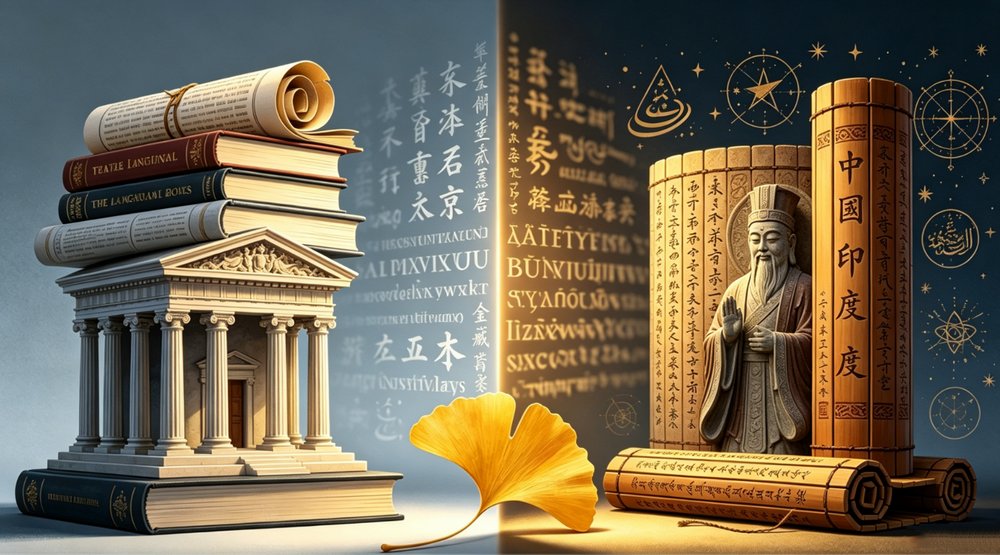
There is a fundamental paradox about global language. European languages dominate academic discourse worldwide. Asian civilisations produced equally sophisticated terminologies. Yet English rarely adopts these original Asian words. This omission persists despite globalisation and cultural pluralism.
The reluctance to adopt Chinese words or expressions into English is clearly related to Britain’s imperial history. Translation was a tool for European expansion. Saint Jerome’s Latin Bible ended Hebrew’s intellectual supremacy. Luther’s German Bible later empowered the German empire. This translation rationale legitimated political and religious conquest. It allowed Europeans to control foreign knowledge systems. The practice continues in modern academia, law and even western and Chinese AI.
False equivalences and stolen meanings
The ethical problem is now acute. Western categories distort non-Western concepts fundamentally. While a Western sage is merely a person of great wisdom and a Christian saint is a divinely canonised holy figure often credited with miracles, a Confucian Shèngrén [1] is humanity’s ultimate moral ideal. He fully internalises core virtues, grasps the natural and social cosmic order, and bears a civilisational duty to shape ethical society through self-cultivation attainable in theory by all people. Direct one-to-one translation is inaccurate. Calling a Confucian Shèngrén a “philosopher” or “sage” misrepresents his role. A Buddhist Héshang [2] or Púsà (Bodhisattva) [3] is not a Christian priest or a Jewish rabbi. These false equivalences erase original cultural meanings. They also disrespect the intellectual traditions they claim to describe.
The Coca-Cola analogy sharpens this critique. Global brands receive stronger legal protection than Asian thought. India and China produced vast intellectual outputs for millennia. Yet their key terms lack similar legal or cultural defence. This imbalance reveals a deep structural inequality. Translation becomes a form of intellectual appropriation.
The Japanese detour
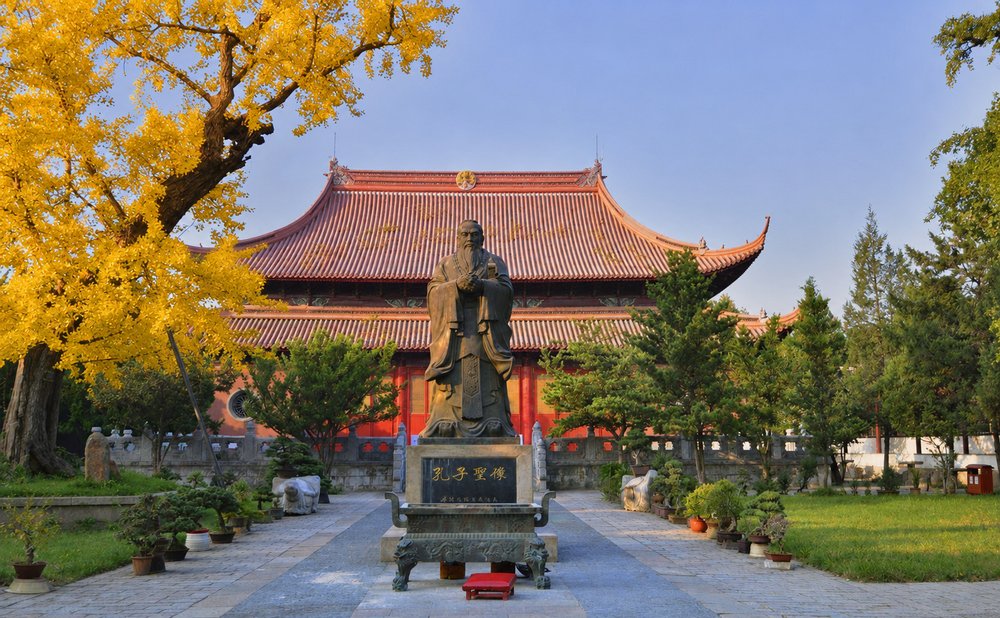
The Confucian Shèngrén offers a clear test case. This concept is central to East Asian civilisation. It has no exact Western counterpart. Neither “sage” nor “saint” nor “prophet” suffices. Confucius himself was a Shèngrén. The entire Rúxué tradition [4] relies on this specificity. The Dàxué [5] teaches how to become a Jūnzǐ [6]. That title is poorly rendered as “Chinese gentleman”. Such translations flatten complex ethical and social ideals.
European imperialism heavily obscured these original terms. Few Chinese words survived that translational onslaught. Some critics point to Japanese loanwords like samurai. They also mention ninja, guru and pundit. Yet these examples remain remarkably few in number. Chinese contributions are almost insignificant in English. This scarcity suggests active resistance rather than accidental neglect.
The pattern is telling. When the West encounters an item invented or discovered in China through Japan, English unfailingly adopts the Japanese name instead of the original Chinese pronunciation.
Consider the strategy game wéiqí (围棋), invented over 2,500 years ago in China; it entered Japan in the 6th century and English as “go” in 1889, taken directly from the Japanese reading igo.
The ornamental carp first selectively bred in imperial China as jǐnlǐ (锦鲤) became koi, after Japanese refinement and colloquial shortening.
The ancient tree yínxìng (银杏), endemic to China, was documented by European botanists not on the mainland but in Japan, where they mis-transcribed the old Japanese kanji reading ginkyō into the now-standard English word ginkgo. Even the miniature landscape art of pénjǐng (盆景) is globally recognised as bonsai, the Japanese pronunciation that completely overshadows its Chinese origin.
This linguistic detour via Japan has effectively erased the original Chinese paternity from the English lexicon.
Power, knowledge and the fight for linguistic sovereignty
World history writing remains under Western administration. Cultural studies still follow European intellectual frameworks. Asian scholars often must publish in English to gain recognition. This forces them to translate their own concepts poorly. The alternative is to revive and promote Asian terminologies. It would restore originality and intellectual sovereignty.
Governments and media allegedly banned Shèngrén research. Over seven hundred Western outlets rejected coverage. Peking University and Harvard terminated related studies. The stated reason involves four hundred sixty years of translation. Linguistic hegemony protects American and European interests. One hundred thousand Asia scholars face obsolescence. Their entire scholarly framework would collapse.
This controversy centres on the future global language. When will non-Western terms finally gain acceptance. The academic establishment, both in the West, as well as in China, resists such fundamental change. Translation practices have become entrenched and powerful. We challenge that entrenched power directly. We call for linguistic decolonisation in scholarship. Unfortunately, the response to this call has been remarkably hostile. This hostility confirms the central argument: power and knowledge remain inseparable in global discourse.
Thank you for reading! We’d love to hear your thoughts. Please share your comments here below and join the conversation with our community!
Endnotes
[1] Shèngrén 圣人 — 至德之人. Within the Rújiā tradition, this is one whose inner virtue fully accords with the cosmic pattern. Through lifelong cultivation, they act without contrivance, perfectly harmonising human affairs with the underlying Way. They serve as the supreme exemplar, appearing only in the rarest epochs.
[2] Héshang — 出家修行者. A Buddhist monk. In the Buddhist order, an ordained follower who renounces household life to uphold the precepts. Dwelling in monastic communities, they devote to meditative practice and textual study, receiving alms from lay supporters. They maintain the living transmission of the awakened teaching across generations.
[3] Púsà — 觉有情. Bodhisattva; Sanskrit: bodhi (觉, awakening) + sattva (有情, sentient being)
A figure on the Buddhist path who awakens the aspiration for perfect enlightenment and trains in the transcendent virtues. They deliberately postpone final liberation, choosing instead to remain amidst the cycle of rebirth to assist every sentient being, driven by boundless compassion and adaptive wisdom.
[4] Rúxué — 儒家学说. This is the Confucian school itself; the scholarly tradition founded upon the ancient classics and the example of primordial kings. It prioritises moral self‑cultivation, ritual propriety, and filial devotion. Adepts study canonical texts to perfect inner virtue and extend harmonious governance from family to realm.
[5] Dàxué — 大人之学. The Great Learning. A canonical text of the Confucian curriculum and a programme for adult formation. It presents a graduated sequence: rectifying the mind, sincere intention, personal cultivation, family regulation, state governance, and universal peace. This framework integrates inner development with outward political order.
[6] Jūnzǐ — 有德之人. The Confucian ideal of a person of established moral substance, distinguished by constant self‑examination and observance of ritual norms. They prioritise righteousness over personal gain. Through persistent study and introspection, they develop steady composure and become a reliable pillar for their community.
📄 Download PDF


Thank you. Very interesting. I didn’t know most of this, although I suspected that ‘western’ colonialism would have caused such distortions.