
Views: 0
Hangzhou: West Lake, gardens and unexpected encounters
Frans Vandenbosch 方腾波 23/11/2026
Hangzhou in late autumn is a city that knows how to hold a mirror to itself. The leaves are turning, the light is softer and West Lake, that eternal centrepiece, seems to breathe a little more slowly. This is the fifteenth instalment of my 2026 China journey, and after the grasslands and deserts of the north, the lushness here feels almost indulgent. But Hangzhou is not merely a pretty face; it is a place where history, daily life and a certain modern playfulness intersect. Let me take you through what I saw.
The big sphere and the walk to the water
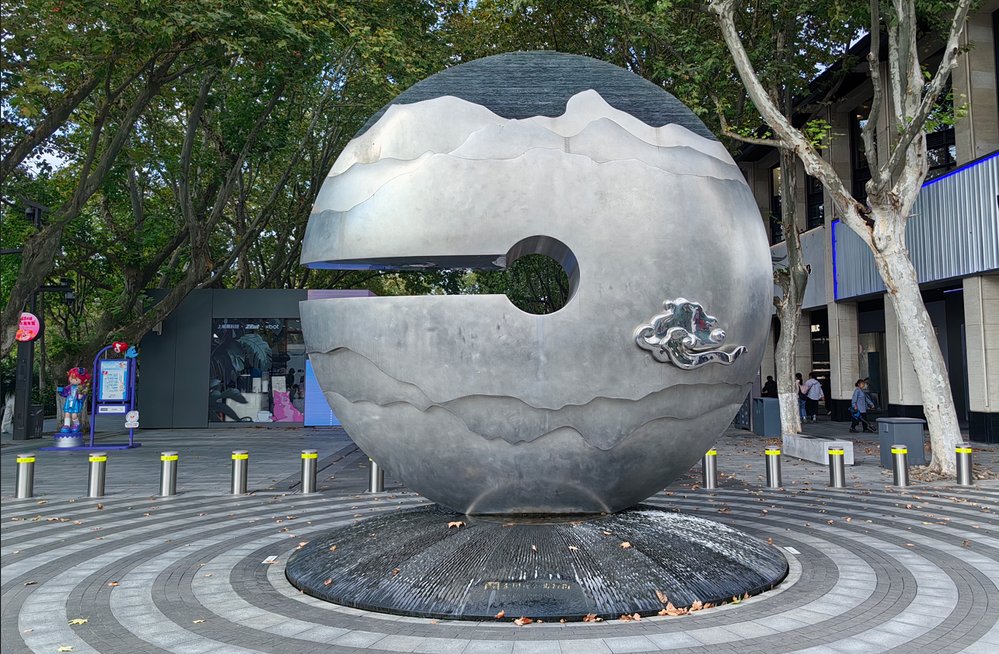
My first encounter was a silver sphere, pierced by a circular hole, inviting a look through it at the city beyond.
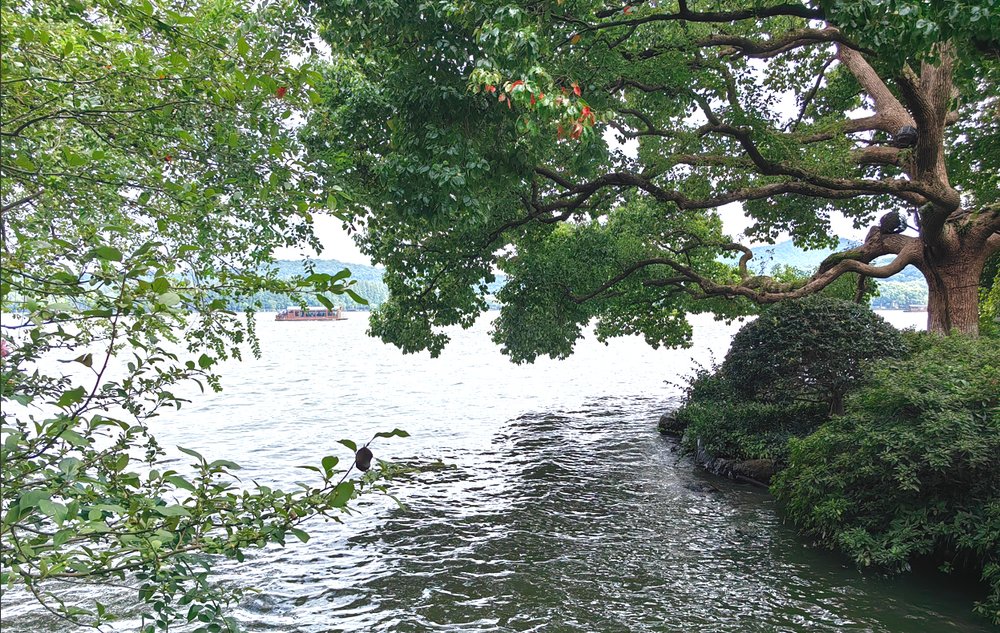
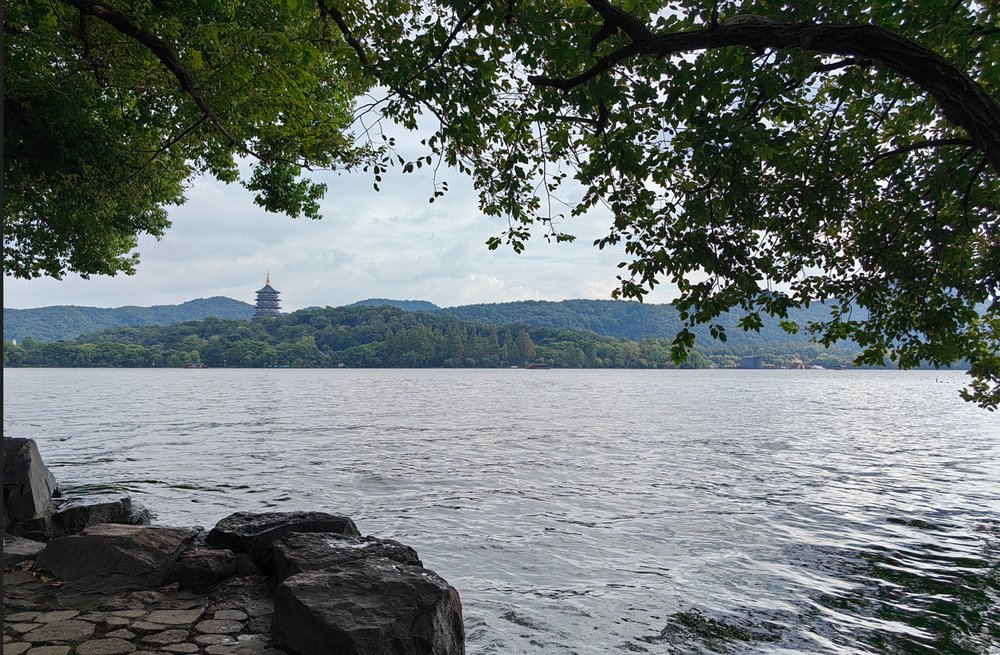
A short walk later, the lake opens up. There she is: a multi-tiered boat, all dark wood and upturned eaves, gliding across the grey-green water with the practised ease of a vessel that has been doing this for centuries. The distant hills are a hazy blue, and the scene is almost too perfect, a postcard come to life.
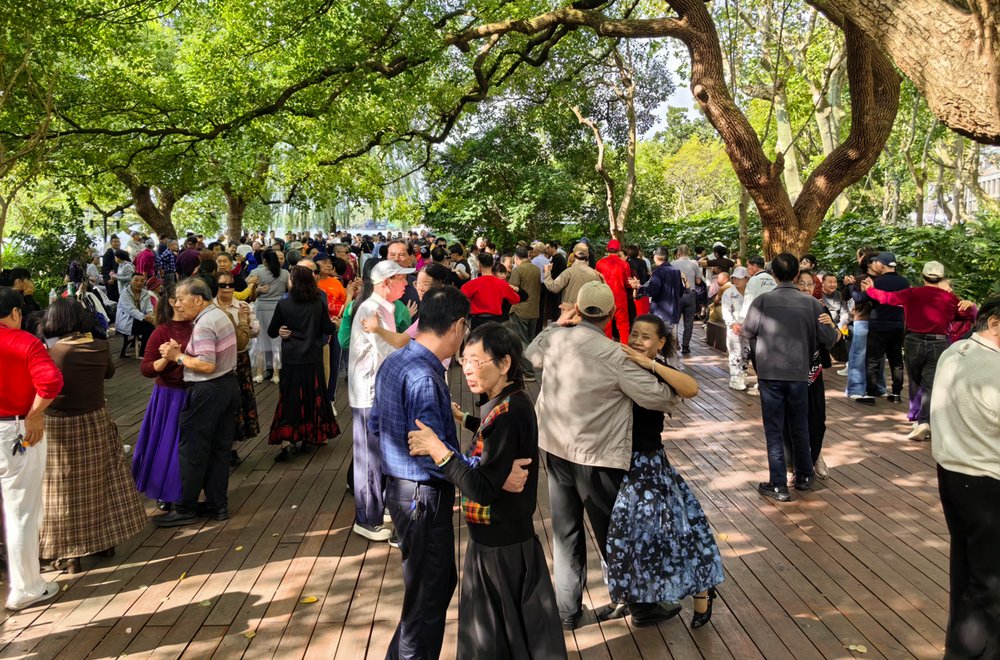
Under the trees, happy residents square-danced in relaxed, rhythmic groups, their smiles and easy steps adding a lively, everyday warmth to the lakeside.
Xiaoyingzhou: the isle of mutual affinity
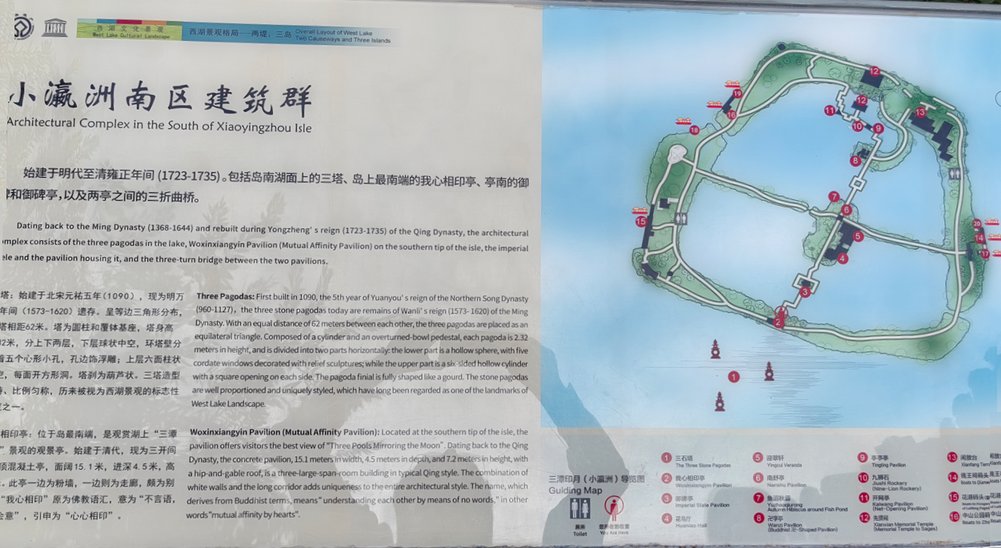
The heart of the West Lake experience, for me, is Xiaoyingzhou (小瀛洲), the largest of the lake’s three islands. Its layout is a marvel of Chinese garden design: a lake within an island and an island within a lake, with winding bridges and causeways dividing the inner waters into a precise, character-like pattern.
The southern architectural complex is the emotional core. Here stands the Wuxianxiang Pavilion (我心相印亭), the Pavilion of Mutual Affinity. The name is a Buddhist phrase meaning “no words needed, hearts already understand”. It is a three-bay structure, its white walls and dark roof classic Qing style, facing directly towards the lake’s most famous icon: the Three Pagodas (三潭印月).
The pagodas themselves are the soul of the scene. Originally erected in 1090 under the Northern Song Dynasty, the current stone structures are Ming-dynasty survivors. Each is a little over two metres tall, with a spherical, hollow body pierced by five circular windows, and a gourd-shaped finial. They stand in an equilateral triangle, sixty-two metres apart, designed so that on a moonlit night, candles placed inside create the illusion of multiple moons shimmering on the water. Standing in the pavilion, looking out at those three silhouettes, you understand why this view has captivated poets and emperors for a millennium.
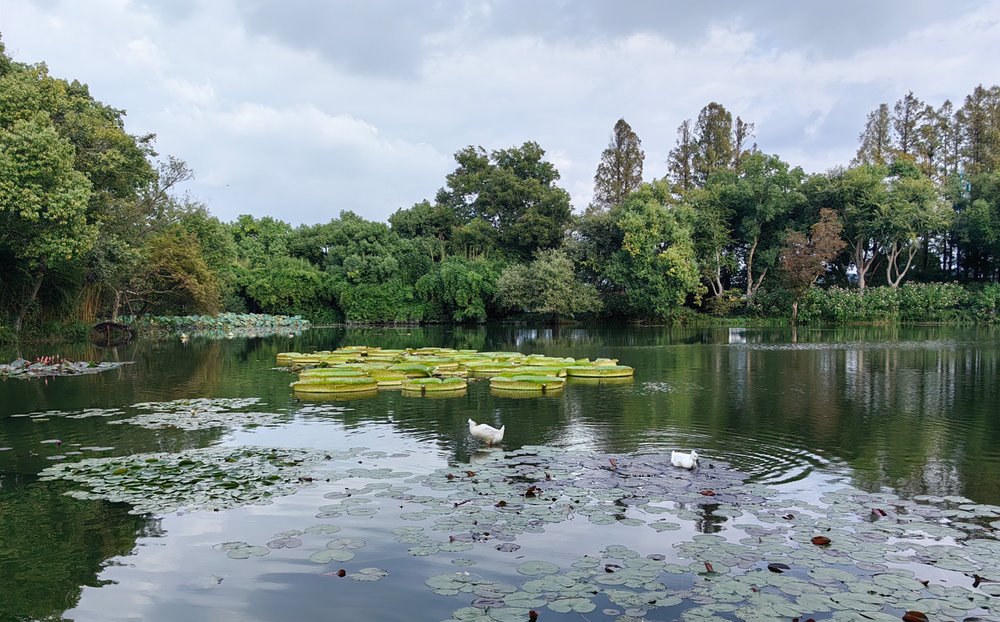
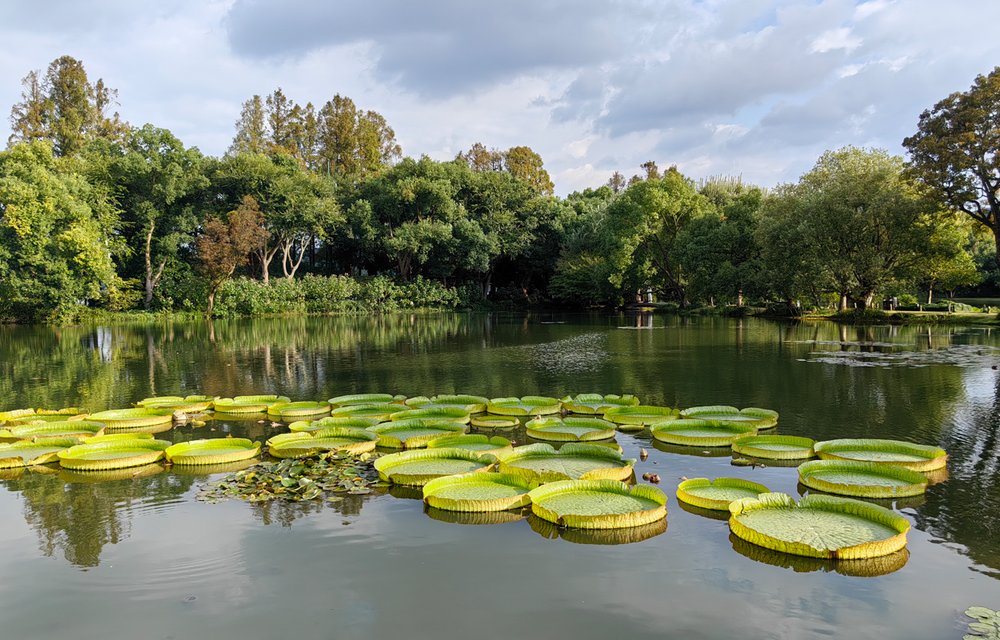
The island is also a haven for wildlife. Giant lotus leaves, some easily a metre across, float on the inner ponds, and white ducks paddle serenely between them. It is a reminder that even within one of China’s most visited landscapes, nature finds its own quiet rhythm.
The boat and the playful heart of the city
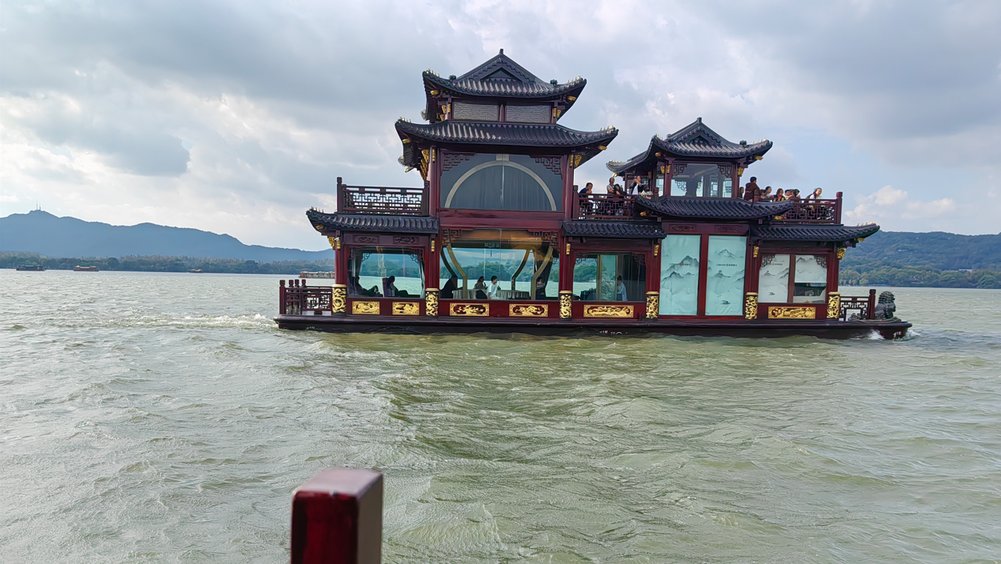
The boat trip itself is a pleasure. These are not simple ferries; they are floating pavilions, with ornate wooden screens, red lanterns and open upper decks where visitors gather to photograph the shoreline. The water is a deep, opaque green, stirred by the boat’s wake, and the air carries the faint, earthy scent of the lake.
Back on land, Hangzhou reveals its playful side. A bright red heart-shaped installation, part of a “West Lake Evening Market” campaign, sits beside a stylised, roller-coaster-like frame spelling out characters. It is public art designed for the selfie generation, and it works: people are posing, smiling and engaging with the space.
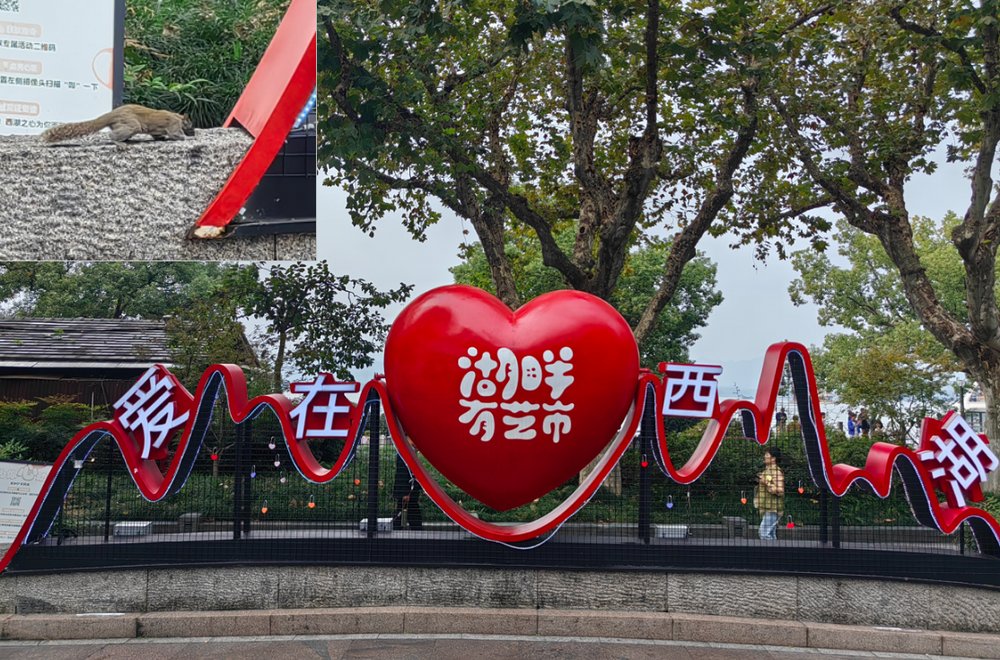
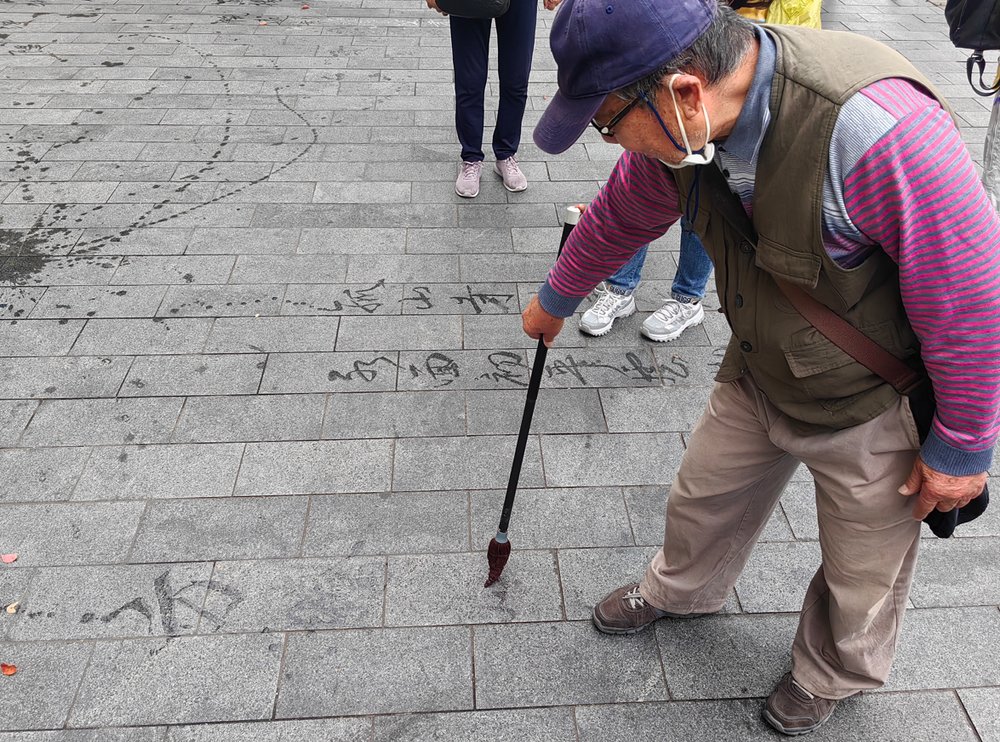
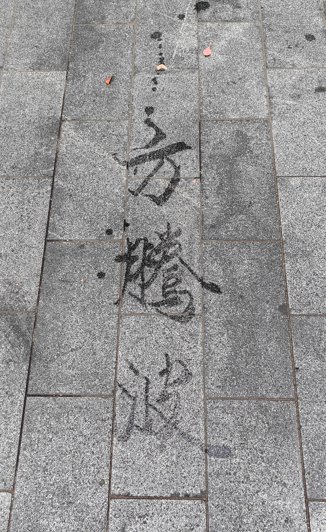
A small squirrel, bold and bushy-tailed, scurries across the evening market sign, entirely unbothered by the humans. On the paving stones, an elderly man wrote my Chinese name, practising his calligraphy with a water brush. The characters dry and vanish in the autumn air, a gentle, ephemeral art form that feels deeply in tune with the city’s character.
Marco Polo: the Venetian who called Hangzhou the City of Heaven
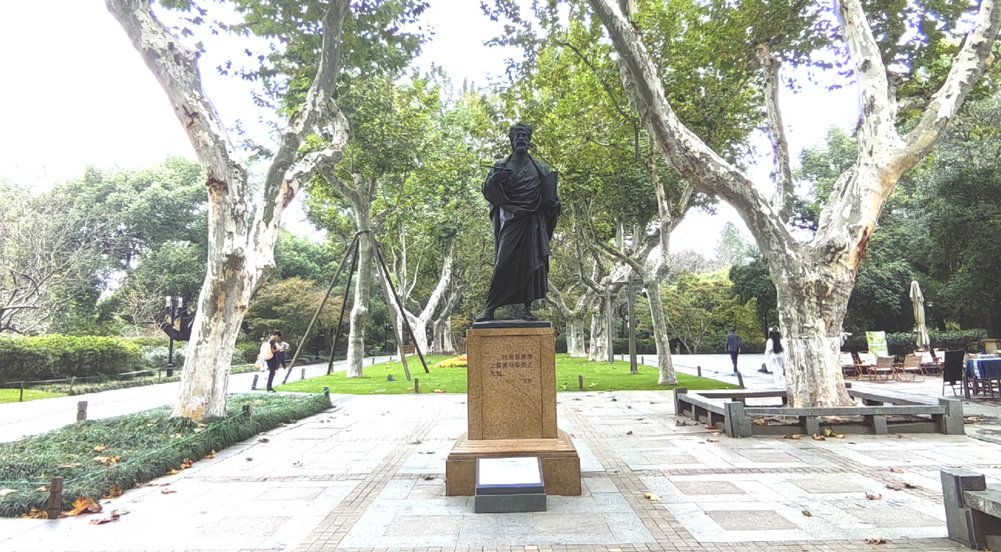
Beneath the towering plane trees near the water’s edge, a bronze figure stands in quiet contemplation. This is Marco Polo, the Venetian merchant and explorer who visited Hangzhou in the late thirteenth century, and whose account of the city would shape the European imagination for centuries. The statue is a memorial to that encounter, placed by West Lake so that his gaze falls, as his own did seven hundred years ago, upon the water and the distant hills.
Marco Polo came to Hangzhou in 1290 during his travels in the service of Kublai Khan. According to his account, later known as Il Milione or The Travels of Marco Polo, he was left in awe by what he found. He called Hangzhou “the City of Heaven”, and described it in terms that still resonate: “beyond dispute the finest and the noblest in the world”. He marvelled at the lake, which he said had a compass of some thirty miles, ringed by “beautiful palaces and mansions of the richest and most exquisite structures you can imagine”. He wrote of the city’s bridges, its silk and sugar, its thriving markets, and the gentility of its people, who, he observed, treated foreign traders with great cordiality. His account was not without its exaggerations and Venetian filters, but its central impression was unambiguous: Hangzhou was, to him, a paradise on earth, a place whose name, Kinsay, became synonymous in Europe with the idea of the celestial city.
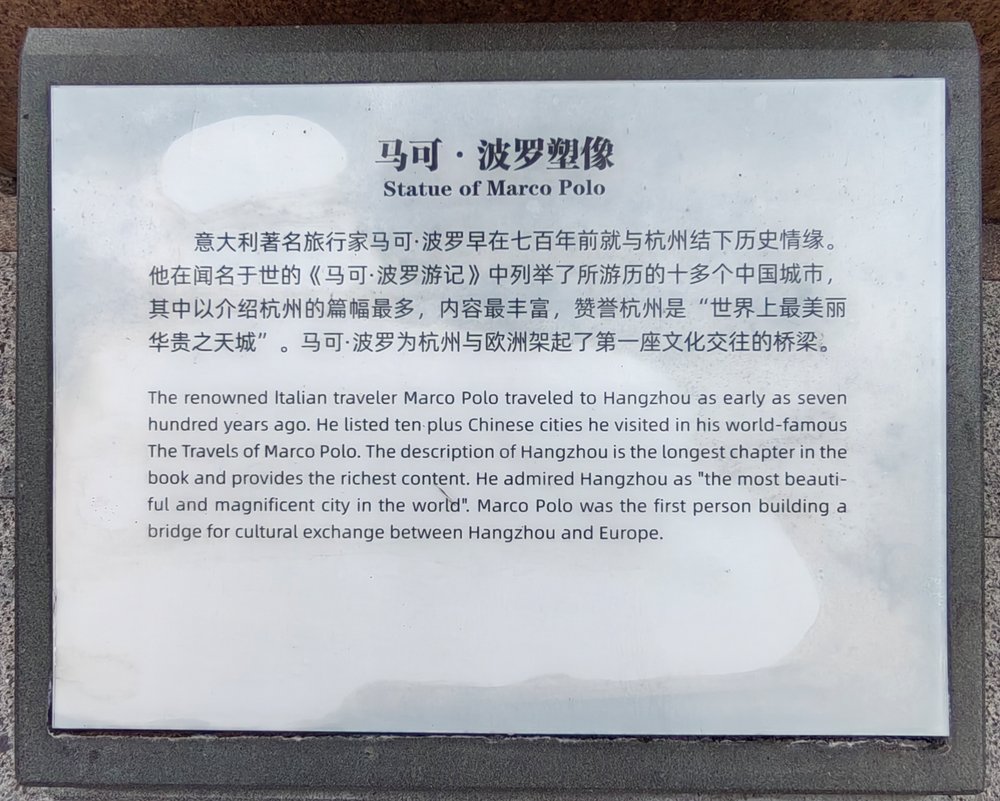
Standing before the statue, it is easy to see why the memorial was placed here. The explorer’s bronze gaze is directed towards the very landscape he praised, a silent, enduring dialogue between the man who first told Europe about West Lake and the lake itself, which has changed far less than the world around it.
A six-year-old polyglot and a glimpse of Hanfu
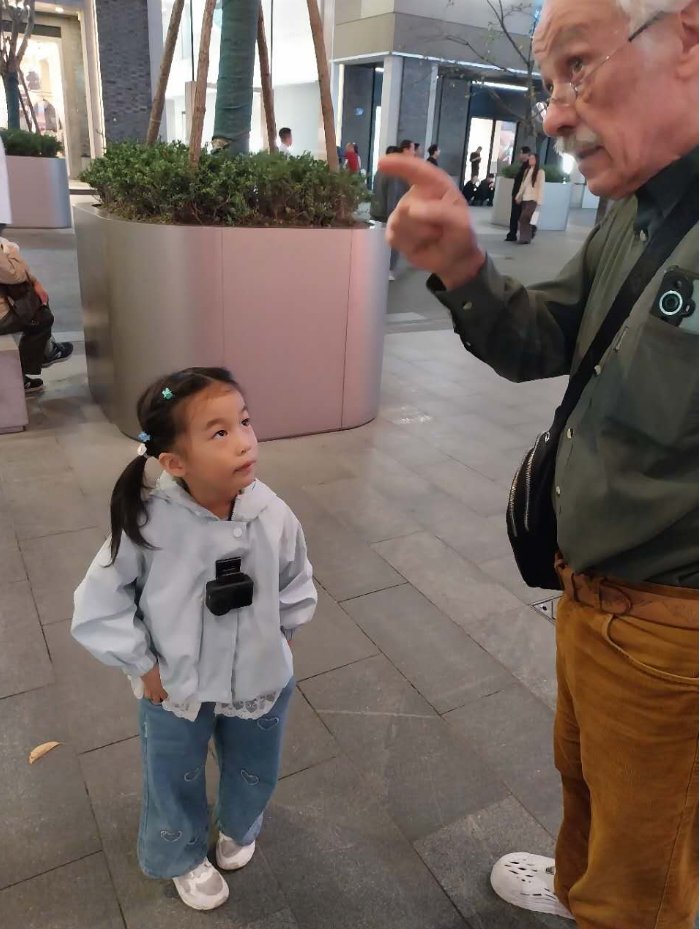
One of the most unexpected moments came when I met a little Chinese girl, no more than six years old, who spoke perfect English. Her confidence was disarming, a small testament to the cosmopolitan undercurrents that flow beneath Hangzhou’s traditional surface. She stood with her hands in her pockets, chatting away.
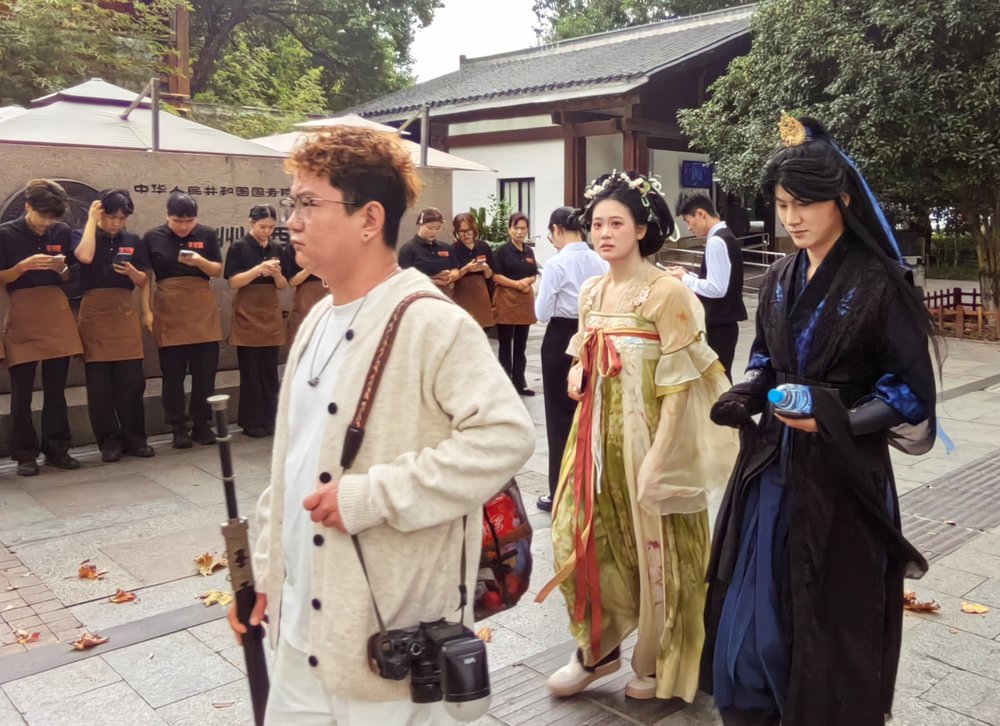
A group of onlookers, some in modern dress and others in elaborate Hanfu costumes, milled about. The juxtaposition was pure China 2026: ancient and modern, local and global, all sharing the same sunlit square.What struck me most, however, was the genuine happiness of the people I met, from the smiling stallholders to the patient calligrapher and the friendly strangers who offered directions without being asked. It was not a performance for visitors but a quiet, everyday warmth that made Hangzhou feel less like a stop on an itinerary and more like a place where life is lived with ease.
Nearby, the Marco Polo statue I had just visited stood beneath those plane trees, a quiet, contemplative counterpoint to the colour and movement of the street.
Reflections
Hangzhou is a city that does not force its history upon you; it simply lets it exist alongside everything else. The Three Pagodas have watched the lake for centuries, but they share the water with pleasure boats and camera phones. A child can speak flawless English while others dress as Tang-dynasty nobles. The old man’s disappearing calligraphy is as much a part of the scene as the permanent bronze statues. This layering of time, influence and expression is what makes the place so compelling. It is not a museum; it is a living, breathing and occasionally surprising organism.
Next week…
… we will leave Hangzhou and travel further south, to Kunming in Yunnan province. A change of altitude, a change of atmosphere and, no doubt, a new set of stories.
📄 Download PDF