
Views: 120
Divergent paths of control and acceptance.
Frans Vandenbosch 方腾波 05/01/2026
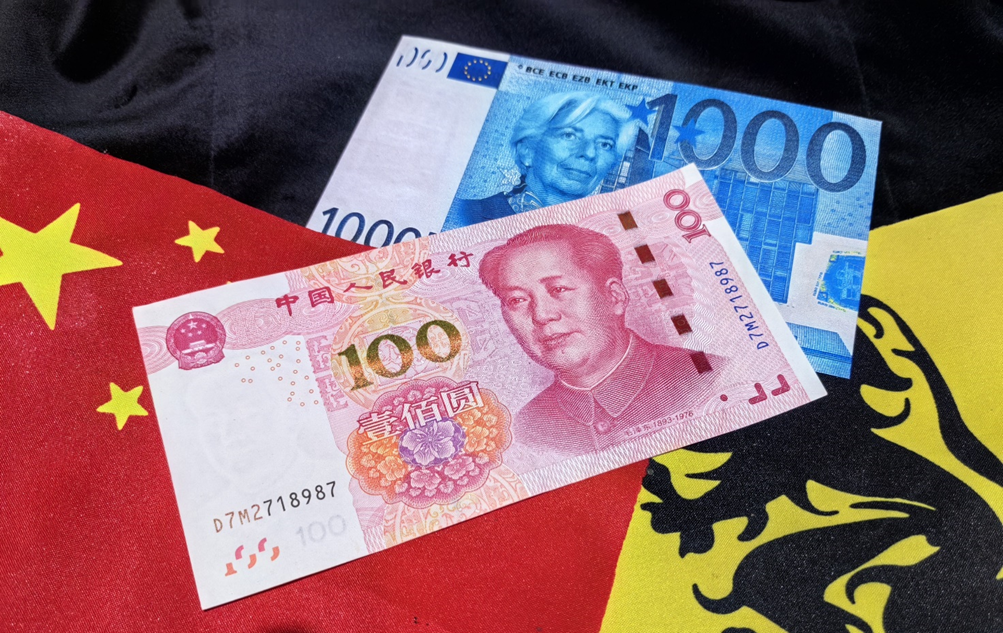
Shadow economies, street vendors and the state’s relationship with ordinary commerce: a comparison of China and the EU
The informal economy occupies a peculiar space in modern governance. It exists everywhere, yet governments approach it with vastly different philosophies. In the EU, the shadow economy is treated primarily as a problem to be eliminated through surveillance and enforcement. In China, by contrast, informal economic activity is increasingly viewed as a social good to be tolerated and even encouraged within limits. This divergence reveals fundamental differences in how societies understand the relationship between citizens, commerce and the state.
Defining the shadow economy
The shadow economy encompasses economic activities that escape official measurement, taxation or regulation. Chinese scholars at the National Information Centre divide this into three categories: grey economy activities such as unlicensed trading and tax avoidance; black economy activities including smuggling, counterfeiting and illegal gambling; and newer forms of network-based fraud.[1] The International Monetary Fund uses a similar framework, defining the shadow economy as legal productive activities deliberately hidden from authorities that would contribute to GDP if recorded.[2]
Globally, shadow economies have shrunk from approximately 34.5 per cent of world GDP in 1991 to around 27.8 per cent in 2015, representing a decline of 6.7 percentage points over this period.[3] More recent analysis suggests this downward trend has continued, with the shadow economy representing 11.8 per cent of total global GDP in 2023.[4] However, these aggregate figures conceal enormous variation between regions and nations. In advanced economies, informal activity typically represents 10 to 20 per cent of GDP, whilst in emerging economies it can reach 30 to 40 per cent.[5]
The EU picture: persistent informality despite surveillance
The EU presents a paradox. Despite extensive financial monitoring, automatic reporting systems and sophisticated tax enforcement, shadow economies remain substantial across the continent. According to research led by economist Friedrich Schneider, the shadow economy in Italy reached approximately 21.6 per cent of GDP in 2024, up from 19.5 per cent in earlier years. Germany’s shadow economy grew from 9.6 per cent to 11.3 per cent of GDP over the same period, whilst France saw an increase from 12.5 per cent to 15 per cent.[6]
Southern EU countries have historically exhibited the largest shadow economies in Western Europe. Greece, Italy, Portugal and Spain all maintain shadow economies exceeding 20 per cent of official GDP, compared with under 10 per cent in Switzerland, Austria and the Netherlands. The EU Parliament’s research service confirms that Italy’s shadow economy is among the highest within the established EU member states, though it had been declining before the pandemic reversed the trend.[7]
There are several explanations for this persistence. European analysts at the IMF identify weak institutional quality, burdensome tax and regulatory systems, and insufficient rule of law as primary drivers of informality. The irony is stark: countries with extensive surveillance infrastructure and automatic financial reporting often have larger shadow economies than those with less intrusive systems. Italy, with its comprehensive banking regulations and information exchange agreements, maintains a shadow economy twice the size of Switzerland’s, where banking secrecy traditions have only recently eroded.
Workers and firms opt for informality to avoid taxes, social security payments and regulatory burdens. Yet informality also serves as a safety net during economic downturns, providing employment and income when formal sector opportunities contract. During the 2008 financial crisis, shadow economies across the EU increased by 1 to 2 percentage points of GDP, suggesting that citizens turn to informal activity precisely when formal structures fail them.[6]
The Chinese approach: embracing the informal street economy
China offers a strikingly distinct perspective on informal commerce. Whilst the shadow economy as a share of GDP reached approximately 20.55 per cent in 2017 with around 159 million informal workers, Chinese policy increasingly treats street vending and small-scale informal enterprise as valuable rather than problematic.[7]
The concept of 地摊经济 (dìtān jīngjì) or street stall economy or street stall economy gained prominence during the pandemic recovery. In May 2020, the former Premier Li Keqiang declared that street stalls and small shops are important sources of employment, describing them as the “human warmth and life” of China, possessing the same vitality as high-end commerce. The central government explicitly removed street trading from the evaluation criteria for “civilised city” assessments, signalling that tolerating informal commerce was now policy rather than deviation.[8]
The results were immediate. Chengdu established over 36,000 mobile stall positions following the relaxation of restrictions, creating employment for at least 100,000 people within weeks. The Chinese State Council reported that setting up 36,000 mobile vendor positions in one western city generated 100,000 jobs overnight. Multiple provinces including Shaanxi, Hubei and Guangdong introduced policies permitting temporary roadside trading, outdoor restaurant seating and extended operating hours for street markets.[9]
Chinese scholars at Wuhan University’s sociology department describe street vendor economies as performing a “social lubricant” function, absorbing vast numbers of workers who would otherwise be unemployed whilst providing flexible, diverse services to urban residents. The MBA Library encyclopaedia notes that street economies relieve employment pressure, offering low-barrier opportunities for rural migrants, laid-off workers and graduates struggling to find formal employment.[10]
Cultural foundations: different views of informal commerce
The contrasting approaches reflect deeper cultural assumptions about commerce, community and state legitimacy.
The EU treats informal economic activity as a problem of compliance. The extensive financial surveillance infrastructure exists precisely to ensure that all economic activity passes through official channels, is documented and is taxed. This reflects a philosophy in which the state has a legitimate claim on all economic value creation, and citizens who evade this claim are behaving illegitimately. Shadow economies persist not because they are tolerated but because enforcement remains imperfect.
Chinese policy, by contrast, increasingly treats informal commerce as a legitimate adaptation to economic circumstances. The street vendor is not primarily a tax evader but a citizen exercising initiative to support themselves and their family. The state’s role is to enable this activity within reasonable bounds rather than to eliminate it. Chinese commentators describe night markets and street stalls as essential “human warmth” that makes cities liveable, characterising their absence as a loss of vitality rather than an achievement of order.
This difference partly reflects practical calculations. China’s urbanisation rate remains below the threshold at which informal economies typically begin declining. Research using the Multiple Indicators Multiple Causes model suggests that informal economic activity in China will continue rising until urbanisation reaches approximately 72.5 per cent. Given current urbanisation levels, Chinese policymakers may simply be accepting an inevitable reality whilst EU policymakers fight against it.[11]
Yet the difference also reflects distinct relationships between citizens and the state. EU welfare states have positioned themselves as providers of security in exchange for comprehensive taxation. Citizens who opt out of this bargain by operating informally are free riders who undermine solidarity. Chinese governance has historically maintained more distance between state and everyday commerce, expecting families and communities to provide for themselves whilst the state focuses on large-scale development and stability. Street vendors fit comfortably within this framework.
The revenue question
The fiscal implications of informal economies are substantial in both contexts. Large shadow economies reduce tax revenues, distort economic indicators and complicate policy planning. EU governments lose significant potential revenue to informality despite their monitoring infrastructure. The intensive hunt for tax evaders by the EU could be interpreted less as a pursuit of a fair taxation system and more as a mechanism of social control, designed to instil a deterrent fear among citizens. Chinese governments, by contrast, consciously forgo taxation on informal transactions.
The costs of enforcement must be weighed against the revenues gained. This calculus plays out differently across countries. While EU states expend considerable resources on enforcement yet still see their shadow economies persist, Chinese authorities consciously forgo some revenue to save on enforcement costs.
Surveillance versus tolerance
The comparison reveals that extensive financial monitoring does not necessarily produce smaller shadow economies. Southern European nations with comprehensive banking surveillance maintain larger informal sectors than China, where enforcement is selective and policy increasingly tolerant of street-level commerce.
This outcome challenges assumptions embedded in the EU policy. If the purpose of financial surveillance is to capture all economic activity within official structures, it has manifestly failed. Italy’s shadow economy approaches a quarter of official GDP despite decades of regulatory tightening. If the purpose is instead to maintain visible compliance whilst accepting inevitable informality, the cost-benefit calculation becomes less favourable.
China’s approach suggests an alternative. Rather than treating informal commerce as a problem to be solved through enforcement, it can be understood as a social good that provides employment, livelihood and urban vitality. The grandmother selling dumplings from a street cart is not a tax evader but a citizen exercising initiative. The young graduate running a night market stall is not avoiding formal employment but gaining experience and income whilst formal opportunities remain scarce.
Neither approach is obviously superior. European citizens enjoy greater legal certainty and more comprehensive social services funded by broader taxation. Chinese citizens enjoy more practical freedom to engage in small-scale commerce without regulatory burden. The choice between these models reflects fundamental values about the relationship between citizens, commerce and the state.
What the comparison demonstrates clearly is that surveillance alone does not eliminate informal economies. If the EU policymakers wish to reduce shadow economic activity, they might consider whether the burdens driving citizens into informality are proportionate to the revenues gained from enforcement. The Chinese example suggests that tolerance, within limits, may produce outcomes no worse than attempted comprehensive control, whilst preserving space for the human warmth that street-level commerce provides.
Thank you for reading! We’d love to hear your thoughts. Please share your comments here below and join the conversation with our community!
本文中文版:
Dit artikel in het Nederlands: Zwart geld en de schaduweconomie
Endnotes
[1] 国家信息中心经济预测部, “中国地下经济规模研究” [Research on the scale of China’s underground economy], 经济研究参考 [Economic Research Reference], no. 31 (2004): 2-18.
[2] International Monetary Fund, “Explaining the Shadow Economy in Europe: Size, Causes and Policy Options,” IMF Working Paper WP/21/178 (July 2021), https://www.imf.org/en/Publications/WP/Issues/2021/07/09/Explaining-the-Shadow-Economy-in-Europe-Size-Causes-and-Policy-Options-461293.
[3] Friedrich Schneider and Dominik H. Enste, “Shadow Economies: Size, Causes, and Consequences,” Journal of Economic Literature 38, no. 1 (March 2000): 77-114.
[4] Friedrich Schneider, “Size and Development of the Shadow Economy of 36 OECD Countries: 2003-2024,” Johannes Kepler University of Linz, Department of Economics Working Paper (2024).
[5] European Parliament, Research Service, “The shadow economy in the European Union,” Briefing PE 689.364 (March 2021), https://www.europarl.europa.eu/RegData/etudes/BRIE/2021/689364/EPRS_BRI(2021)689364_EN.pdf.
[6] Leandro Medina and Friedrich Schneider, “Shadow Economies Around the World: What Did We Learn Over the Last 20 Years?,” IMF Working Paper WP/18/17 (January 2018), https://www.imf.org/en/Publications/WP/Issues/2018/01/25/Shadow-Economies-Around-the-World-What-Did-We-Learn-Over-the-Last-20-Years-45583.
[7] 陈龙, 李实, “中国非正规就业与非正规经济:规模测算及国际比较” [China’s informal employment and informal economy: scale measurement and international comparison], 经济学动态 [Economic Perspectives], no. 10 (2019): 18-32.
[8] 新华网, “李克强:地摊经济、小店经济是就业岗位的重要来源” [Li Keqiang: Street stall economy and small shop economy are important sources of employment], Xinhua News Agency, 1 June 2020, http://www.xinhuanet.com/politics/2020-06/01/c_1126058438.htm.
[9] 国务院办公厅, “关于进一步做好稳就业工作的意见” [Opinions on further stabilising employment], State Council General Office Document No. 28 (2020).
[10] 武汉大学社会学系, “城市摊贩经济的社会功能研究” [Research on the social functions of urban street vendor economy], 武汉大学学报(哲学社会科学版) [Wuhan University Journal (Philosophy and Social Sciences)], vol. 73, no. 4 (2020): 123-135.
[11] 孙久文, 张鹏飞, “中国地下经济规模估算:基于MIMIC模型” [Estimating the scale of China’s underground economy: based on the MIMIC model], 统计研究 [Statistical Research] 34, no. 8 (2017): 53-63.
📄 Download PDF