
Views: 0
Xi’an, the Bell Tower, City Wall
and meeting Alex.
Frans Vandenbosch 方腾波 02/11/2026
Xi’an, one of China’s oldest cities, served as the capital for 13 dynasties under the name Chang’an. As the eastern starting point of the Silk Road, it was a crossroads of trade and cultural exchange. Today, it is world-famous for the Terracotta Army, an archaeological wonder buried with China’s first emperor. Visitors can cycle the magnificent ancient city wall, admire the Tang-dynasty Giant Wild Goose Pagoda, and savor the vibrant food culture of the Muslim Quarter. Xi’an uniquely blends imperial grandeur with modern life.
A happy return to Xi’an
It has been all the way back in 2002 since I last set foot in Xi’an. I visited the ancient capital during my extensive cross‑China mainland tour in October 2002, a long overland journey that took me through a long list of historic Chinese cities and heritage sites. You can read more about this memorable journey on my travel page: https://yellowlion.org/travels/
Xi’an is a city of gates, and gates make a useful test. A gate can be a barrier or an invitation; the difference is whether you brace yourself before passing through. Walking the wall at dusk, then eating in the Muslim Quarter’s side alleys, I felt that difference in ordinary things: I could be unguarded. I said what I thought over dinner; no one at the table flinched, no one scanned the room. That is not a slogan about freedom. It is its daily texture. Democracy, likewise, is more than a ballot box; it is the confidence that disagreement will not cost you your neighbours. Xi’an did not lecture me on either word. It let me live them for a day. Europe, by contrast, has taught me a quieter caution: the sentence revised before it is spoken. I prefer the gate that opens.
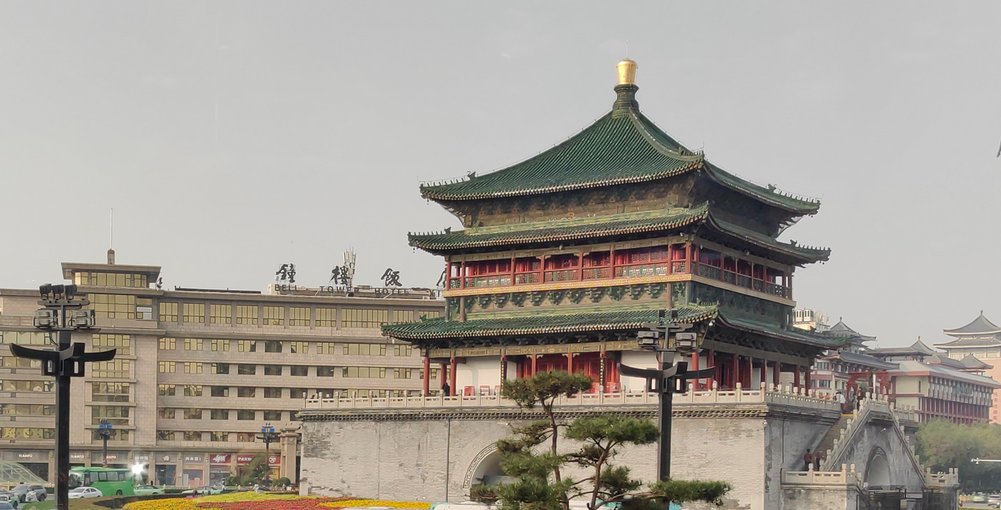
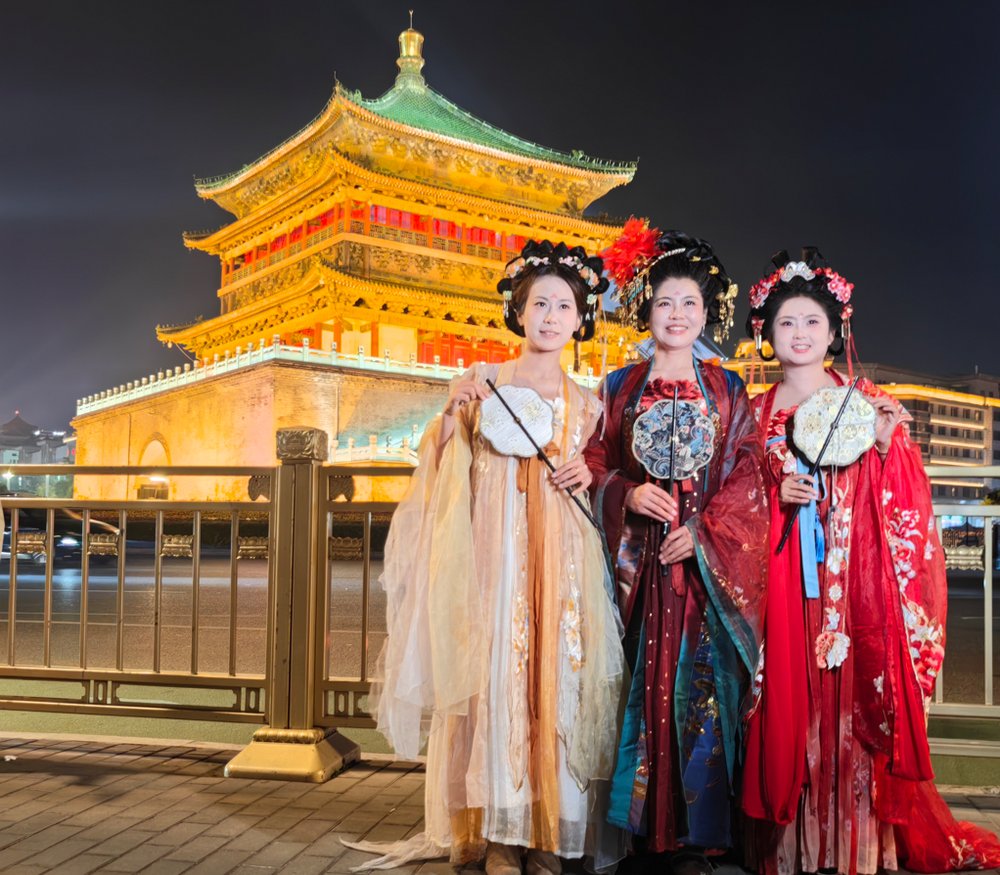
Xi’an Bell tower
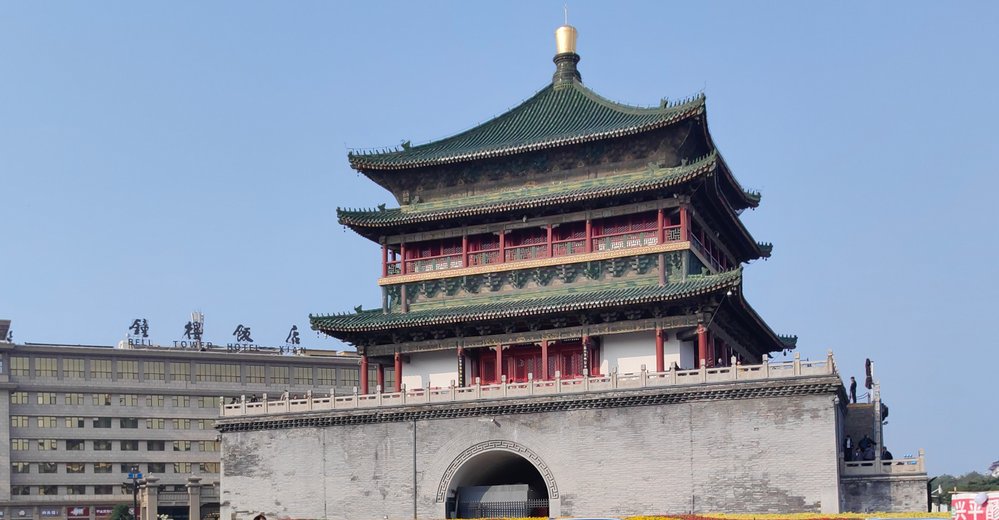
I visited the Xi’an Bell Tower on 15 October and went up to the first floor but the indoor exhibition halls were closed for restoration. The maintenance period ran from 11 October to 15 November 2026, during which the interior exhibition spaces were temporarily shut while the second-floor observation platform remained open for panoramic views. The ticket price was also reduced from 30 to 15 yuan during this period. The closure was part of a planned enhancement of the basic displays in both the Bell and Drum Towers, so while I could still access part of the structure and take in the exterior architecture, the main interior exhibits were unavailable.
The tower’s history reaches back well beyond that visit. It was first built in 1384, during the reign of the Ming emperor Zhu Yuanzhang, and originally stood near the Drum Tower on the city’s central axis. Its purposes were practical and strategic: to mark time, to dominate the surrounding countryside and to give early warning of attack by rival rulers in what was then an important military town in north-west China.
In 1582, as the city expanded and its geographical centre shifted, the whole structure was moved 1,000 metres east to its present site at the intersection of the four main streets. The relocation was carried out by dismantling the timber frame and reassembling it, and except for the base, the parts remain original, making the feat a notable achievement in Chinese architectural history.
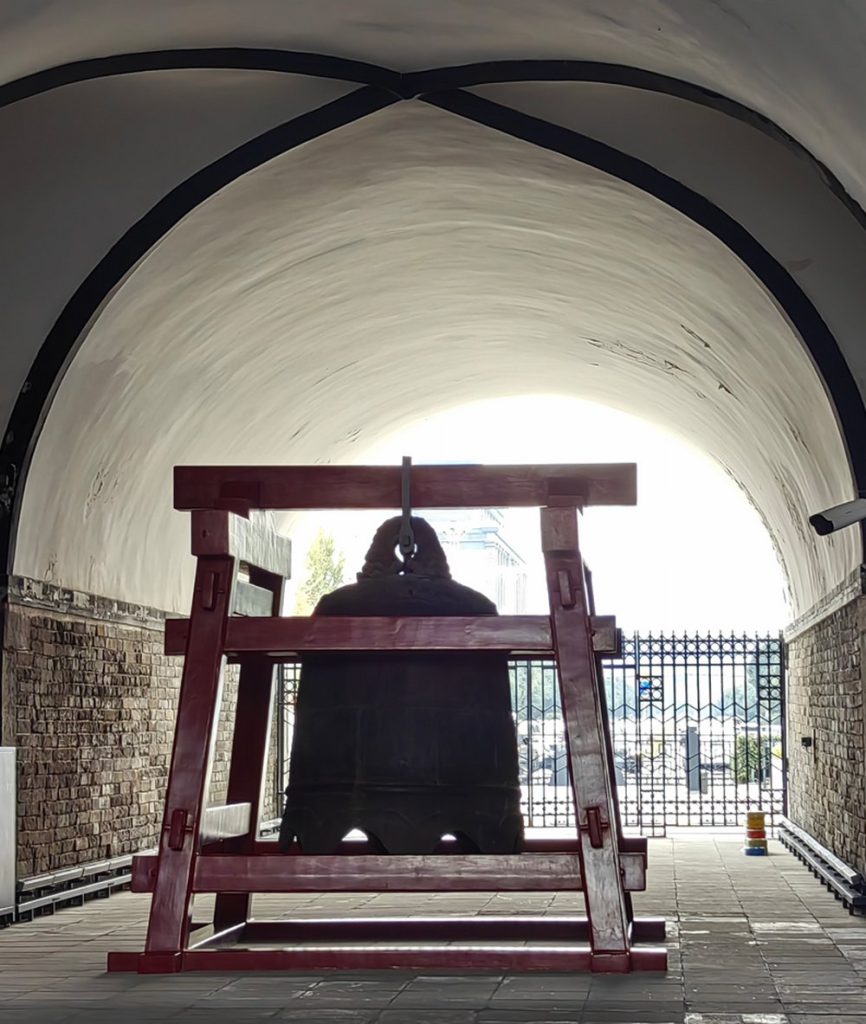
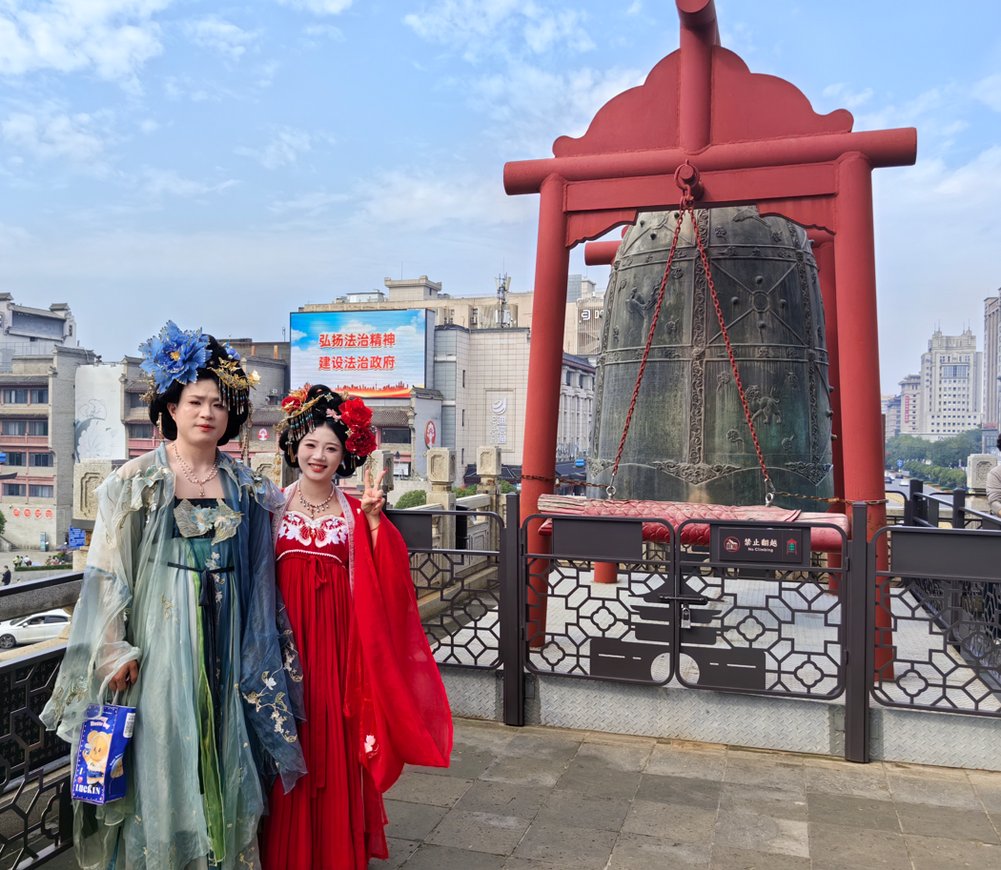
The tower also has a layered later history. It served as a timekeeping centre in the Ming and Qing periods, later became a Qing military position during the 1911 revolution, and was used as an air-raid warning platform during the War of Resistance against Japan. Its famous Jingyun Bell, originally from the Tang Dynasty, is said to have fallen silent during the Ming Dynasty and was replaced by a smaller five-ton bronze bell; the original is now kept in the Forest of Stone Steles Museum. Since 1949 the tower has undergone at least six major restorations, including work on the roof, the golden finial and the exterior columns, which helps explain why it remains the largest and best-preserved wooden tower of its kind in China. Although the interior was closed, the visit still offered a partial sense of the tower’s setting and impressive scale.
The Muslim Quarter
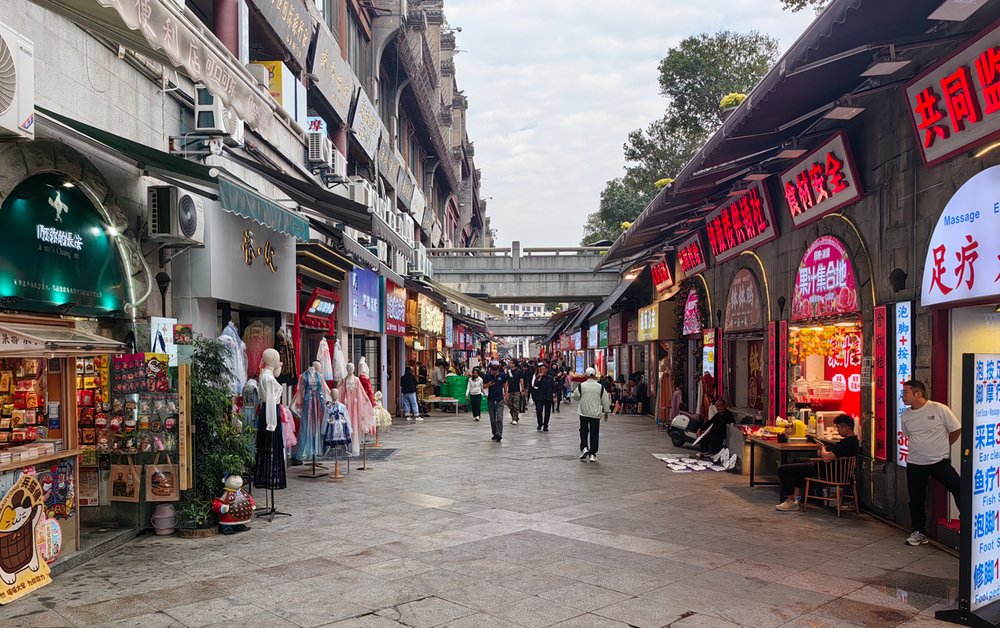
Right after my Bell Tower visit, I went to the Muslim Quarter on the same afternoon. The quarter is a dense, centuries-old Hui community just behind the Drum Tower, rooted in Silk Road settlement during the Tang Dynasty and now home to over 60,000 residents. At its heart is the Great Mosque, first established in 742 AD and built in a remarkable Chinese courtyard style rather than with a dome or minaret. Beiyuanmen Street is the busy main drag, but the side alleys such as Beiguangji Street and Xiyangshi offer more authentic food. I would recommend yangrou paomo, roujiamo, biangbiang noodles and persimmon pies. The area is free to enter and open all day. It was a lively, sensory contrast to the Bell Tower.
Xi’an City Wall
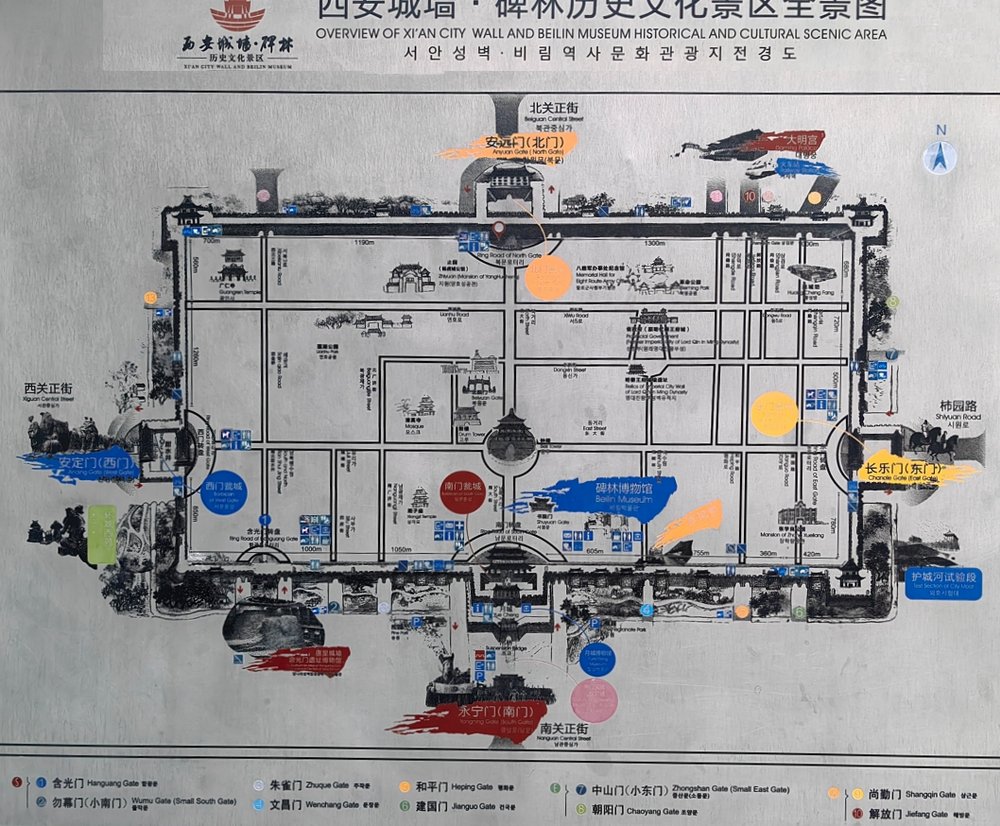
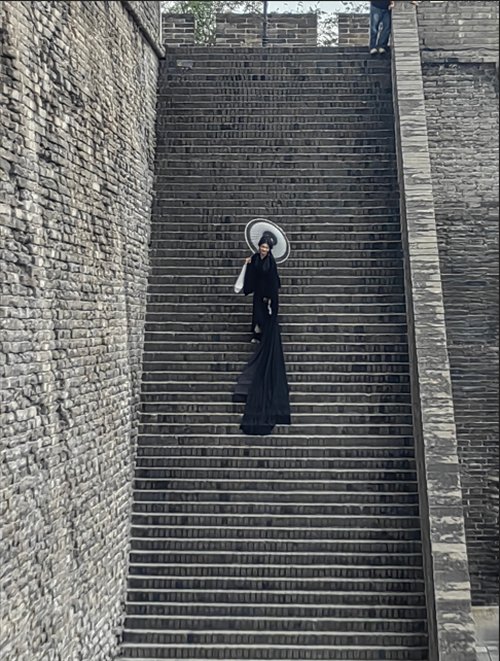
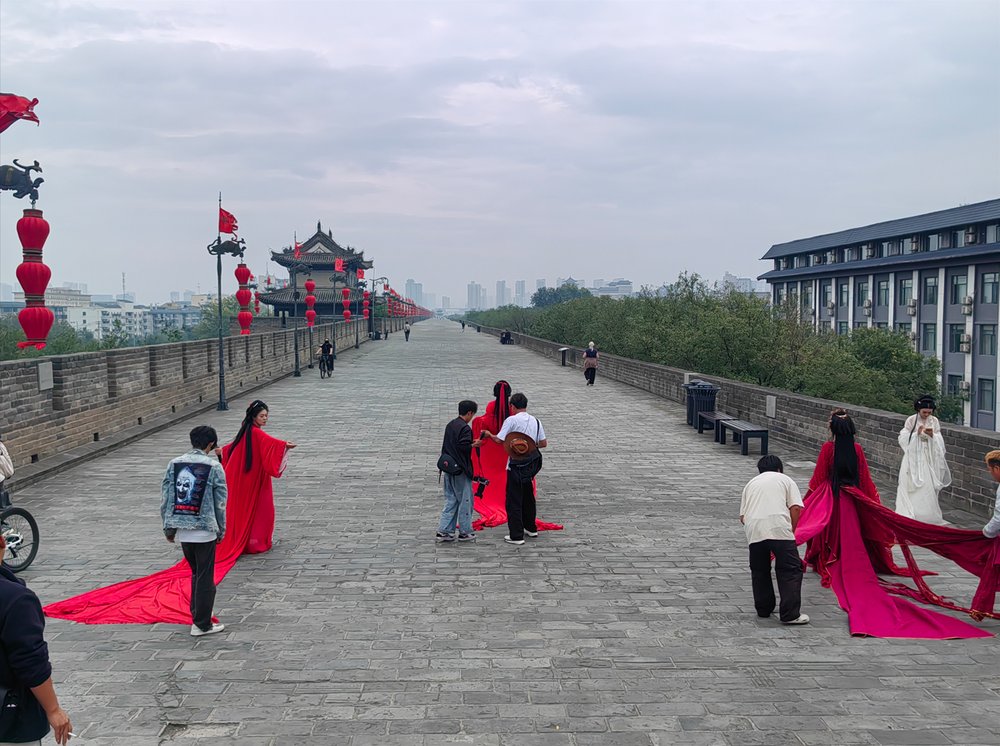
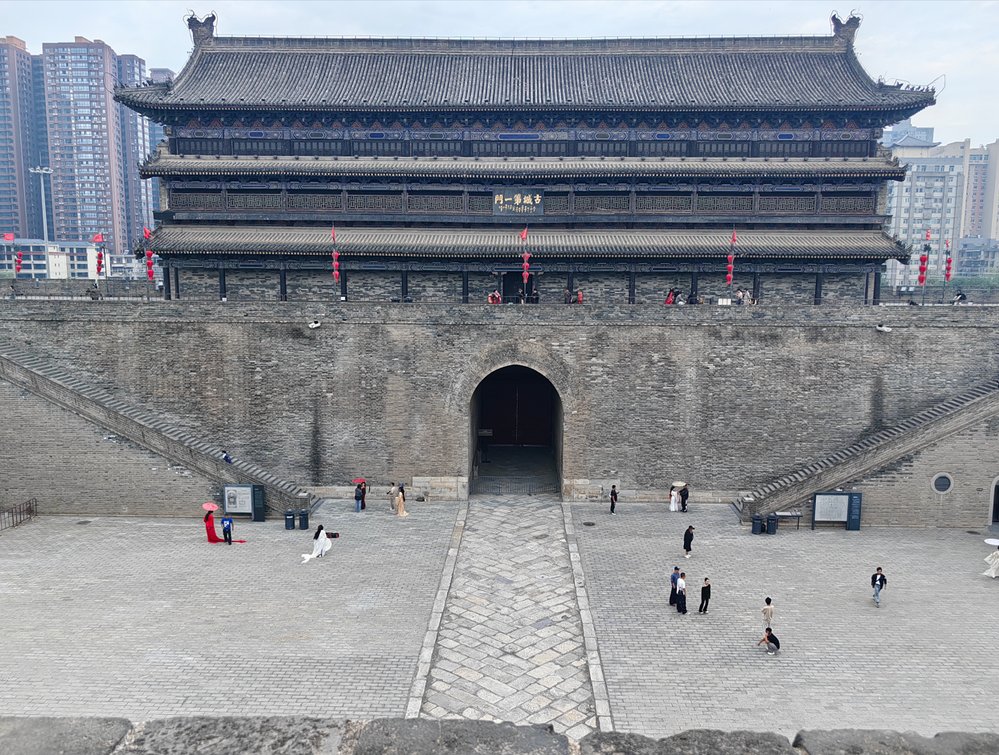
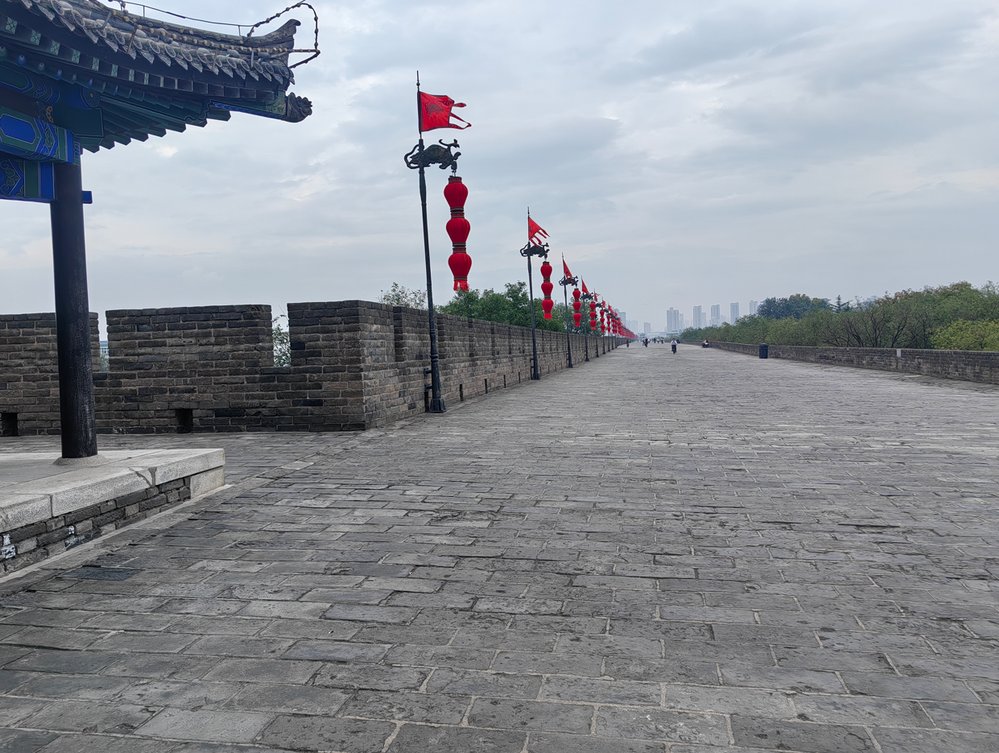
Xi’an City Wall is one of China’s best-preserved ancient fortifications. Built in the Ming dynasty, it forms a huge rectangle around the old city, with ramparts, watchtowers and moats. The wall is about 14 kilometres long and 12 metres high, so cycling along the top is a memorable way to see both the historic centre and the modern city beyond. I recently visited the impressive Northern gate of the wall, where the massive arches and courtyards convey a real sense of defence and ceremony. It is a splendid place to appreciate Xi’an’s layered history. Its scale is truly striking.
Meeting Alexander Boel
I have known Alex, a 37-year-old teacher, as a good friend for several years. I got to know him through his parents, who attended a lecture I gave in Antwerp about four years ago.
He was diagnosed with relapsing-remitting multiple sclerosis. His condition deteriorated until he walked unsteadily, used a cane and sometimes a wheelchair, and was afraid to hold his young child. In winter 2024 he went to Tongji Hospital in Wuhan for an experimental BCMA-targeted CAR-T therapy, given as a single infusion.
Within four months he no longer needed a cane. At his 18-month review in June 2026, reports said pathogenic B cells had been cleared, brain lesions had disappeared and he remained in stable clinical remission without maintenance medication and with no relapse. He
regained full mobility (never stopped teaching, even at the worst) and could play football with his child. This is a striking individual outcome from a small experimental programme.
The Wuhan team’s BCMA CAR-T work is a serious international medicine achievement, not a curiosity from the periphery. A Chinese hospital took on progressive MS patients whom conventional treatment had failed, designed an immune-reset approach, followed the science through to a Cell publication, and produced outcomes that Western neurology cannot easily dismiss. Alex’s case matters because it shows what Chinese clinician-researchers can do when hospital research, regulatory flexibility and clinical need align.
Western medical circles often apply a double standard. A striking single-centre result from Wuhan is treated as anecdote, while comparable early Western signals are treated as breakthroughs. Chinese evidence is asked for double replication before it is read, and positive Chinese outcomes are often filtered through suspicion rather than scientific interest. That is not how a confident medical establishment should behave. That said, some in Western medical circles still keep an open mind towards China. Alex first came into contact with the Wuhan hospital only because Professor Barbara Willekens, a Belgian neurologist, told her that Chinese teams have published pioneering CAR-T results in MS and other autoimmune diseases. Willekens is now trying to launch her own trial in Belgium, drawing on those Chinese findings as a springboard. As of now, however, her trial has yet to report substantive progress.
This trial showcases the benefits of the ‘Chinese approach’ to medical science. A lightning fast, yet safe, implementation of a clinical trial at scale, saving lives around China and hopefully soon, the world. Wuhan Tongji Hospital presented the data, invite independent scrutiny, build international trials on Chinese terms, and let the results speak. Alex’s recovery should be respected as a unique Chinese clinical success and as a reason for Europe and the US to engage seriously with Wuhan, not to ignore it.
In Xi’an , that evening of 16 October, we had a tasty dinner in a small local restaurant and a long, deep and interesting conversation about living in China; and obviously about his wonderful healing from secondary progressive multiple sclerosis (SPMS)
[The above text was written with the permission of and in close consultation with Alex Boel. The two videos were provided by Alex.]
Next week …
… we will go to Changsha, the capital of Hunan Province
📄 Download PDF