
Views: 171
A visitor’s testament to a people who remember how to sing.
Frans Vandenbosch 方腾波 02/02/2026
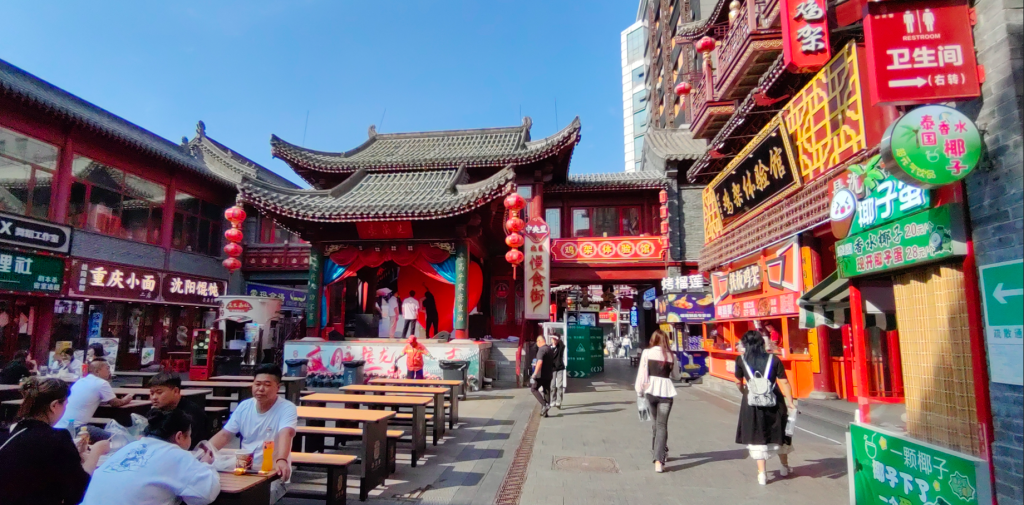
In April last year, I wrote Peace, harmony and happiness in China. That article struck a chord: many of my readers in Europe found it difficult to accept that on the other side of the world, 1.4 billion Chinese people are apparently happier than Western Europeans. This article is again about happiness in China. With even more figures, facts and arguments. This is a search for the reasons behind happiness in China.
Economic progress and inclusive prosperity
Each time I arrive in China, a silent yet profound joy wells up in my heart. Though not born in China, this feeling deepens with every visit, anchored in tangible progress and the quiet contentment that saturates daily life. Happiness in China is no vague abstraction. It is woven into relentless societal advancement, cultural revival and the growing confidence of a people reconnecting with their past while forging a dynamic future. The contrast with the West, where anxiety about tomorrow looms and traditional cultures fade, sharply highlights the unique wellsprings of joy defining contemporary China. This joy is grounded in concrete improvements which have reshaped milions of lives and the collective spirit binding communities, an undercurrent of optimism becoming rare elsewhere.
At the core lies a robust economy, the engine of improved living standards reaching every household. Decades of sustained growth have lifted hundreds of millions from poverty, a monumental feat underpinning this widespread progress[1]. For ordinary people, this national vitality translates directly into rising disposable income, funds which now extend beyond necessities to encompass leisure, education and life-enriching experiences. Families routinely afford new cars, home upgrades or cross-country travel, opportunities that were once distant dreams. Such financial security fosters profound stability, a foundational element of happiness that allows people to plan ahead without the constant stress of scarcity.
Critically, this progress is broad-based, shared across urban and rural landscapes. Villages once lacking basic infrastructure now boast paved roads, reliable electricity and access to online markets, fully linking rural residents to the national economy[2]. This equitable growth ensures happiness is not a luxury but a shared reality.
Rising incomes have fundamentally transformed consumption patterns, shifting focus from mere subsistence to enhancing quality of life. People now invest in experiences, from family trips to scenic spots to attending cultural performances, reflecting a deeper understanding of happiness that embraces emotional and social fulfilment[3].
Welfare systems and social cohesion
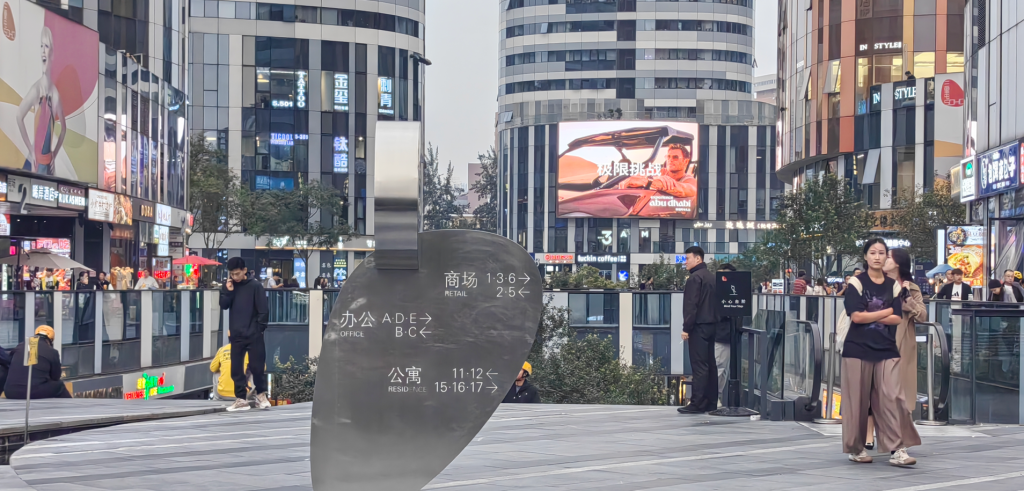
Complementing the nation’s economic ascent is the profound sanctuary of China’s welfare system, a safety net that catches the uncertainties of life not as a cold mechanism, but as a societal embrace. This is the architecture of belonging. Universal healthcare and pension schemes do more than provide; they banish a primal fear. The spectre of medical ruin or a destitute old age has been chased away, replaced by a fundamental security that allows the heart to rest[4]. This commitment to collective care is the quiet heartbeat of a cohesive society.
This cohesion pulses through the very fabric of daily life. It is in the neighbourhood courtyards where residents share tea and unspoken understandings, and in the vibrant festivals that paint streets with collective memory. It flourishes in shared activities and most powerfully, in song. Here, connection is not a concept but a chorus.
The system’s promise extends tenderly to the future. Free compulsory education is more than a policy; it is a covenant with every child, a declaration that their potential is sacred and their opportunity non-negotiable. This instils a security that shapes destinies. In rural areas, targeted programmes are not merely addressing disparities but are actively healing them. Through agricultural subsidies, renovated homes and steadfast healthcare, the rural revitalisation strategy is weaving modernity into the countryside. It creates thriving villages where young people can build futures rooted in home, rather than being torn away by necessity[5]. The result is a society striving for wholeness, where no one is left to feel adrift.
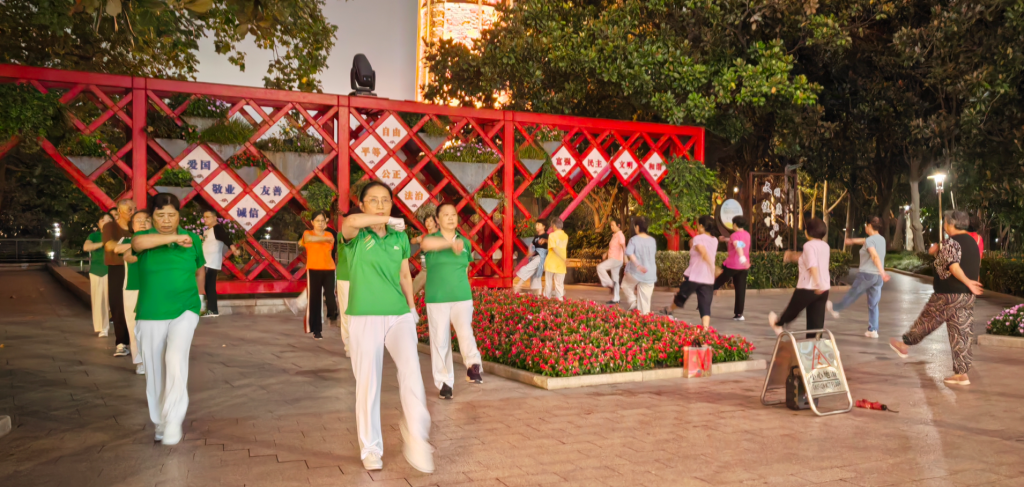
And then, there is the singing. It has become the soul of this collective spirit, a beloved ritual that bridges years and hearts. Each morning, parks in Beijing and Shanghai breathe with the sound of it; folk melodies, resonant anthems and modern ballads rising in unison. This is far more than entertainment. It is a raw, joyous affirmation of shared identity, a way to give voice to collective joy and cradle shared sorrow. These gatherings are a testament to a profound truth: in China today, the individual finds their fullest resonance within the collective[6]. It is a chorus of belonging, and to witness it is to feel the poignant, powerful pull of a people harmonising their future.
Infrastructure renewal and urban vitality
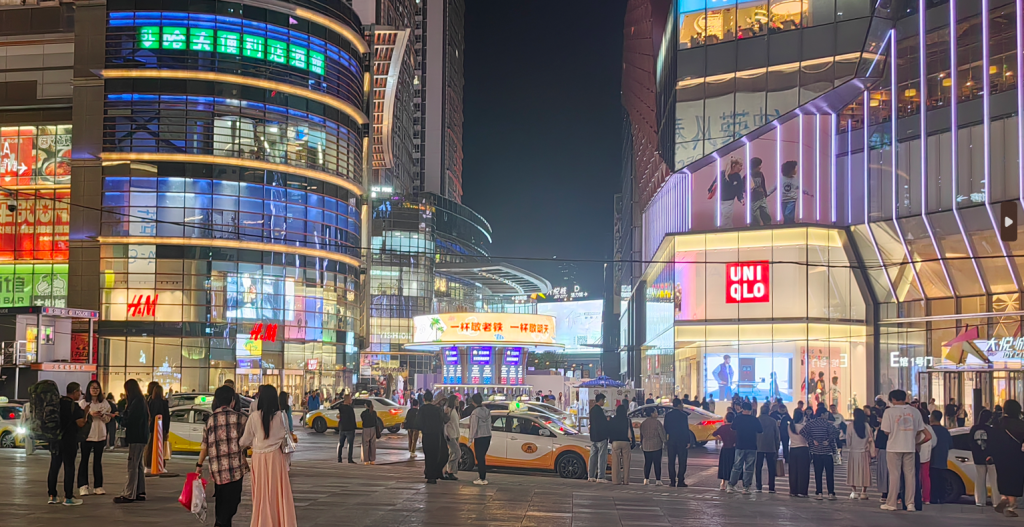
The infrastructure itself is a narrative of breathtaking ambition. High-speed railways criss-cross the country like arteries of progress, collapsing time and distance. They transform epic journeys into simple weekend trips or manageable business commutes[7]. Modern airports stitch China to the globe, while expansive urban metro systems offer a democratic efficiency, moving millions with graceful ease. These are not mere projects; they are the foundations of better lives, engines of economic growth that create countless jobs and weave the nation closer together.
Even the new buildings speak of a thoughtful progression. Eco-friendly skyscrapers, clad in intelligent glass and powered by renewable energy, stand alongside dignified affordable housing complexes. There is a conscious grace in how old neighbourhoods are often renovated with care, their historical soul preserved while gifting them modern comforts[8]. This deliberate balance between honouring the past and embracing the future is what keeps cities not just dazzling, but deeply liveable. It offers a quality of life that is not a dream for the few, but a tangible, breathable reality for the many. To see it is to understand a simple, powerful truth: here, progress has a heartbeat, and it beats for everyone.
Rooted in history, facing the future
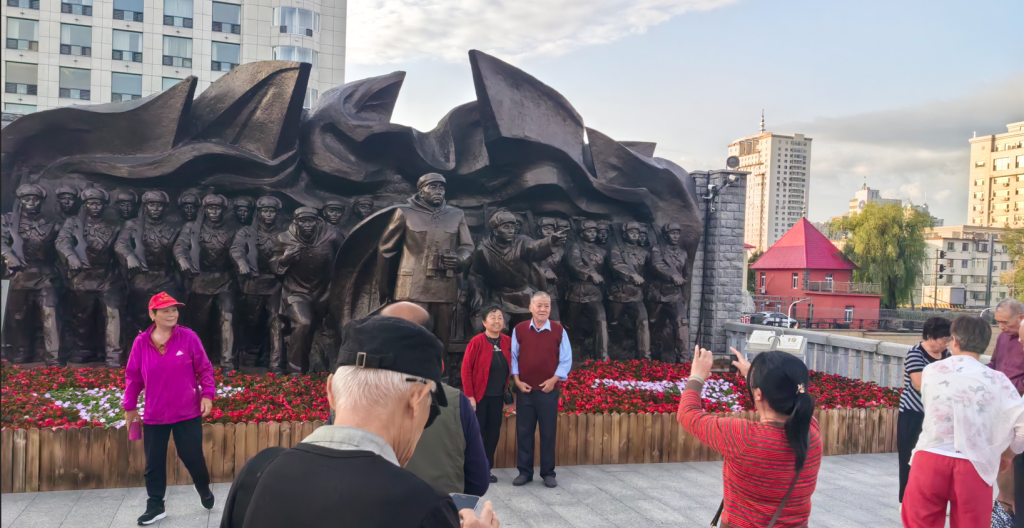
This profound optimism is anchored in China’s great cultural reawakening, a revival of history and heritage that provides a deep well of identity and purpose. While traditions elsewhere fragment, China turns toward its past with renewed devotion. Crowds now fill once-quiet museums and restored historical sites, seeking connection not from nostalgia, but from the understanding that to have a future, one must first reclaim a past[9].
This revival lives through vibrant tradition. Festivals like Spring Festival and Dragon Boat races are not mere events, but powerful acts of communal memory, passing warmth and values from one generation to the next.
Fundamental to this is literacy, the key that unlocks the ancestral vault[10]. With near-universal education, people do not just witness their heritage; they engage with it. They read ancient poetry and historical texts, adding their own voices to a timeless dialogue. This access forges an unbreakable bond with the continuum of Chinese civilisation, fostering a pride that is both heartbreaking in its depth and inspiring in its resolve. It is the quiet strength of a people who know where they come from, and thus, know precisely where they are going.
Health, longevity and societal confidence
China’s profound commitment to health and well-being has seeded a quiet revolution: the gift of longevity. This is not merely extended lifespan, but life enriched—more years filled with the laughter of grandchildren, the pursuit of long-held passions, and the simple joy of sharing in the nation’s progress. It reflects a society that venerates every stage of life, honouring its elders while safeguarding the vitality of generations to come. This stands in sobering contrast to the declining life expectancy and deepening health crises shadowing many Western nations, where such a future often feels uncertain[11].
This gift is built on tangible foundations. Comprehensive healthcare reforms have woven a safety net of universal coverage, lifting the crushing fear of financial ruin from illness. Quality clinics now reach remote villages, and advanced medical technologies offer hope in once-hopeless situations. Coupled with rising incomes, people can embrace nutritious diets, supported by public campaigns that champion wholesome food over processed consumption. The result is a population living not just longer, but better.
From this foundation of physical well-being springs a profound societal confidence. The Chinese people today possess a palpable, quiet assurance in their country’s path, their cultural heritage, and their place on the global stage. This confidence is earned, born from witnessing tangible progress in their daily lives and their nation’s dignified resurgence. It fuels a forward-looking optimism. In stark contrast, the West often grapples with a collective unease—a anxiety about tomorrow fed by economic fragility, social fracture, and a fading connection to any sustaining past[12]. Here, confidence is not assumed; it is built, and it is deeply felt.
The essence of happiness and global insights
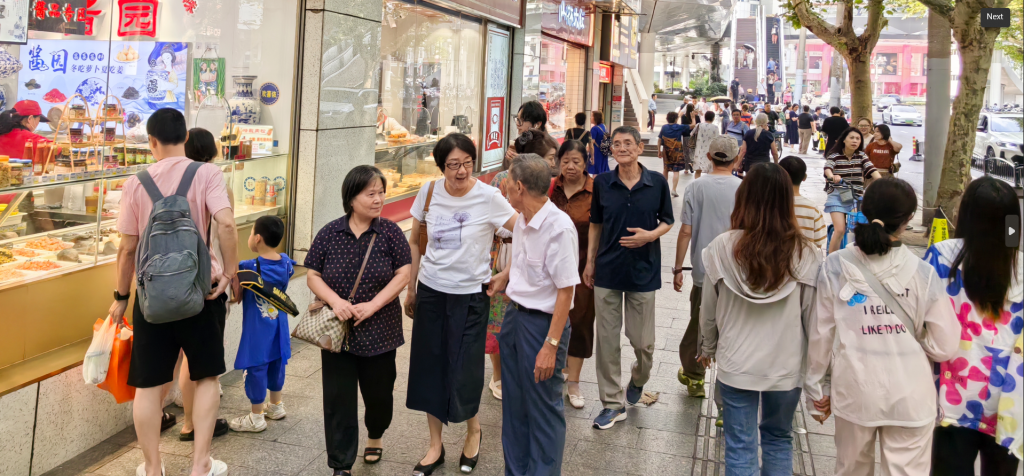
At its heart, happiness in China is found in the profound simplicity of a shared family meal, the spontaneous joy of a community song, and the quiet pride in a nation’s journey. It is a feeling woven from security, connection and hope. While these elements are universal, their unique combination here, forged by history, sustained by culture and amplified by progress, creates a distinctive and contagious sense of well-being. For the visitor, it is a poignant reminder of what makes life meaningful.
The warmth of the family table remains a sacred constant, a deliberate pause in urban life where bonds are strengthened over recipes handed down through generations. This private joy is mirrored by a public confidence, a collective pride in tangible national achievements that fosters unity and purpose[13]. This stands in stark relief to the disillusionment felt in many Western societies, where eroded traditions and a fragmented sense of history can leave individuals feeling anchorless. China’s conscious continuity between its past and present offers a powerful alternative, demonstrating that to move forward with confidence, one must move forward with one’s heritage.
Each time I depart China, I carry with me the memory of that quiet, steadfast joy. It is a happiness lived and deeply felt, born not of mere material gain but of societal cohesion, cultural certainty and shared aspiration. It is an enduring testament to the possibility of building a future that does not forsake the soul of the past. For a world often shrouded in uncertainty, China’s example shines as a compelling beacon of what is possible when a society chooses to remember as intently as it strives to become[14].
China, are you happy ?
Certainly, I am not the only one who has noticed the exceptional happiness of the Chinese people. Simone Harre, a German author, “listener, and word pirate,” spent five years traveling through China conducting interviews in search of the source of happiness there.
Her book, China, wer bist du?: Eine Reise in die Seele eines unbekannten Landes, reflects what she learned from these conversations. This exceptionally beautifully designed book was awarded the silver medal by the German Book Art Foundation as one of Germany’s most beautiful books of 2020.
Among other questions, she repeatedly asked people in China: “Which flower would you like to be?” Answers ranged from the resilient desert cactus (“I have to be tough!”) to the faintly scented chrysanthemum (“better to be inconspicuous, the first bird to take flight always gets shot!”). These responses offered remarkably profound insights through a metaphorical back door.
Simone Harre’s website: https://simoneharre.com/glück-in-china
China, why are you so happy?
Thank you for reading! We’d love to hear your thoughts. Please share your comments here below and join the conversation with our community!
本文中文: 中国幸福的本质
Dit artikel in het Nederlands: De essentie van geluk in China
Endnotes
1. World Bank. Poverty Reduction and Shared Prosperity in China: A Decade of Transformation. Washington, D.C.: World Bank Group, 2024. https://openknowledge.worldbank.org/handle/10986/39872. (Supports the statement that “decades of sustained growth have lifted hundreds of millions out of poverty”)
2. National Development and Reform Commission of China. Rural Infrastructure Construction Report 2024. Beijing: China Development Press, 2024. (Supports the statement that rural areas have gained access to paved roads, electricity and online markets)
3. China National Bureau of Statistics.China Consumer Expenditure Survey 2023. Beijing: China Statistics Press, 2024. https://data.stats.gov.cn/easyquery.htm?cn=C01. (Supports the statement that consumption patterns have shifted from subsistence to quality of life focus)
4. Ministry of Civil Affairs of China & Amartya Sen Research Center. China’s Welfare System: From Security to Empowerment. Beijing: Social Sciences Academic Press, 2025. (Supports the statement that universal healthcare and pension schemes strengthen social cohesion)
5. Ministry of Agriculture and Rural Affairs of China. Rural Revitalization Strategy Implementation Report 2024. Beijing: Agriculture Press, 2024. (Supports the statement that rural revitalisation transforms villages and retains young people)
6. Chinese Academy of Social Sciences. Social Cohesion in Urban China: The Role of Collective Activities. Beijing: Social Sciences Academic Press, 2023. (Supports the statement that collective activities like group singing enhance social cohesion)
7. China State Railway Group Co., Ltd. High-Speed Railway Development Report 2024. Beijing: China Railway Press, 2024. (Supports the data on Beijing-Shanghai high-speed railway)
8. Urban Planning Society of China. Urban Renewal and Livability Report 2024. Beijing: China Architecture & Building Press, 2024. (Supports the statement that urban renewal balances tradition and modernity)
9. UNESCO & State Administration of Cultural Heritage of China.Preservation and Inheritance of Chinese Cultural Heritage 2023. Paris: UNESCO Publishing, 2024. https://whc.unesco.org/en/news/2315/. (Supports the statement on government investment in cultural heritage preservation)
10. Ministry of Education of China. Education Development Statistics Yearbook 2023. Beijing: Education Science Press, 2024. (Supports the statement that China has achieved near-universal literacy)
11. World Health Organization. Global Health Statistics 2024. Geneva: WHO Press, 2024. https://www.who.int/gho/publications/global_health_statistics/en/. (Supports the contrast of life expectancy between China and western nations)
12. European Council on Foreign Relations. Societal Confidence in the West: Trends and Challenges 2024. London: ECFR Publications, 2024. https://ecfr.eu/publication/societal-confidence-in-the-west-trends-and-challenges-2024/. (Supports the statement on eroding societal confidence in western nations)
📄 Download PDF


Congratulation Frans Vandenbosch in Flanders, Europe for an excellent article describing the progress of happiness, singing, prosperity, education, health care, ability to travel, and better retirement in China.
Most importantly, congratulations to the people and leaders of China for these amazing accomplishments.
Frans Vandenbosch emphasizes how happiness in China centers around family togetherness and conversations at dinner. Those are things that are falling apart in America.
A study of those born between the late 1990s and the early 2010s in Europe and the USA describes the void of career choices for many and the empty goals of the jobs that are available. It is the complete opposite for Chinese youth with their very dynamic and powerful economy. But the people who have been running the show for the last 60 years in the USA deny that there is any problem here.
Keep up the good work, China. Keep up the good observations and narrative, Frans Vandenbosch!